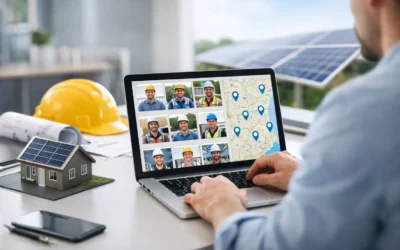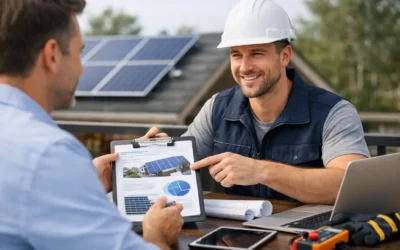
Searching for Solar Contractors Near Me usually means you are ready to move beyond general research and start planning a real solar project. Whether you want to lower monthly utility bills, improve energy independence, reduce long-term operating costs, increase property value, or add backup power capabilities during outages, finding the right solar contractor is one of the most important decisions you will make.
At first, the process may appear simple. Most people assume they can search online, compare a few reviews, request some quotes, and hire whichever company looks the most trustworthy. In reality, choosing between different Solar Contractors Near Me often requires much more careful evaluation than most property owners expect.
Solar energy systems are long-term investments. The contractor you hire affects permitting, engineering, equipment quality, installation workmanship, electrical integration, system performance, warranties, future maintenance, and long-term support. A professionally designed system can provide decades of reliable savings and improved energy control. A poorly planned installation can create delays, unexpected costs, disappointing production, and long-term service problems.
The good news is that the process becomes much easier once you understand what actually matters when comparing solar contractors. Whether you are planning a residential installation, commercial solar project, agricultural energy system, or public-sector infrastructure upgrade, the right contractor should offer more than just panels and pricing. They should provide clear communication, realistic expectations, transparent proposals, and long-term support.
What “Solar Contractors Near Me” Really Means
When people search for Solar Contractors Near Me, they are usually looking for local expertise, accountability, and contractors who understand regional requirements.
Solar projects involve many location-specific factors, including:
- Local permit offices
- Utility company requirements
- Inspection procedures
- Regional building codes
- Fire setback rules
- Weather conditions
- Roofing trends
- Electrical infrastructure standards
A contractor who regularly works in your area may already understand common permit timelines, utility paperwork requirements, and inspection expectations. That familiarity can help reduce delays and avoid common project complications.
Still, location alone should never be the only deciding factor.
The closest installer is not automatically the best installer. Some companies focus almost entirely on residential rooftop systems, while others specialize in commercial projects, battery storage systems, agricultural installations, or government energy infrastructure.
If your project has specific requirements, contractor experience with that exact type of work matters more than distance alone.
That is why the smartest way to compare Solar Contractors Near Me is to begin with local providers and then narrow the field based on project compatibility, communication quality, warranties, equipment selection, and long-term support.
Why More Property Owners Are Going Solar
Solar adoption continues increasing because property owners want greater control over long-term energy expenses. Utility rates remain unpredictable in many regions, and solar provides an opportunity to stabilize a portion of those costs over time.
Residential homeowners often pursue solar because they want:
- Lower utility bills
- Energy independence
- Backup power during outages
- Long-term savings
- Cleaner energy usage
- Improved property value
Commercial property owners frequently focus on:
- Reducing operating costs
- Lowering daytime electrical demand
- Long-term budgeting stability
- Corporate sustainability goals
- Energy efficiency improvements
Agricultural operations often use solar to offset energy usage from irrigation systems, refrigeration equipment, barns, pumps, and processing facilities.
Government agencies and institutions may pursue solar as part of infrastructure modernization or sustainability planning.
Federal incentives have also contributed to increased solar interest. The federal Residential Clean Energy Credit allows qualifying homeowners to receive tax incentives for eligible installations. Information about these incentives can be found through ENERGY STAR.
As technology improves and battery systems become more accessible, more people continue searching for Solar Contractors Near Me because they want realistic guidance from experienced professionals.
Why Choosing The Right Solar Contractor Matters
Not all solar contractors operate at the same level of quality or professionalism. The difference between a successful installation and a frustrating one often comes down to contractor selection.
A strong contractor should provide:
- Clear communication
- Transparent pricing
- Detailed proposals
- Accurate production estimates
- Professional installation practices
- Reliable project timelines
- Long-term service support
- Warranty guidance
- Local permitting experience
A weak contractor may rely on vague pricing, unrealistic savings promises, aggressive sales tactics, or incomplete project planning.
Because solar systems are expected to operate for decades, choosing the right contractor matters just as much as choosing the right equipment.
How To Compare Solar Contractors Near Me Properly
One of the most common mistakes buyers make is comparing Solar Contractors Near Me based only on total price.
Price matters, but it should never be the only factor.
One contractor may appear less expensive because they:
- Use lower-tier equipment
- Exclude electrical upgrades
- Offer weaker warranties
- Propose a smaller system
- Reduce labor scope
- Leave out monitoring systems
Another proposal may cost more because it includes:
- Premium solar panels
- Battery-ready infrastructure
- Longer workmanship warranties
- Better monitoring systems
- Higher production capacity
- More complete project management
When comparing contractors, review:
- System size
- Expected annual production
- Panel efficiency ratings
- Inverter quality
- Battery compatibility
- Monitoring capabilities
- Installation timeline
- Warranty coverage
- Long-term support
- Overall project scope
Reliable contractors should explain these differences clearly.
Questions To Ask Solar Contractors Near Me
Trustworthy Solar Contractors Near Me should welcome detailed questions from potential customers.
Who Will Perform The Installation?
Some companies handle every phase of the project internally, while others subcontract portions of the work.
You should understand:
- Who designs the system
- Who handles permits
- Who performs installation
- Who manages inspections
- Who provides future support
What Equipment Will Be Used?
Ask about:
- Solar panel manufacturers
- Inverter brands
- Battery storage systems
- Monitoring platforms
- Warranty terms
Equipment quality directly affects long-term reliability and production.
How Are Production Estimates Calculated?
Solar production estimates should account for:
- Roof orientation
- Shading
- Climate conditions
- Energy usage patterns
- Local weather data
- Utility rate structures
Many reputable installers use modeling methods supported by NREL (National Renewable Energy Laboratory) to estimate long-term system performance.
What Is Included In The Proposal?
Always ask whether the proposal includes:
- Permitting
- Engineering
- Electrical upgrades
- Structural review
- Monitoring setup
- Utility paperwork
- Inspection coordination
- Battery preparation
Unexpected costs often appear when project scope details are unclear.
Understanding Residential Solar Projects
Residential solar projects are usually designed around reducing utility costs and improving long-term energy independence.
Homeowners often prioritize:
- Lower monthly utility bills
- Roof aesthetics
- Battery backup systems
- Long-term savings
- Financing options
- Property value improvements
Residential contractors should understand roof conditions, shade analysis, electrical upgrades, and homeowner financing solutions.
Many homeowners also explore solar backup power options to maintain electricity during outages.
Commercial Solar Installations
Commercial solar systems are often more focused on operational efficiency and long-term budgeting stability.
Commercial buyers frequently evaluate:
- Return on investment
- Demand charge reduction
- Energy forecasting
- Utility expense management
- Operational continuity
Commercial installations may involve:
- Flat roof systems
- Large electrical infrastructure
- Multi-building coordination
- Advanced engineering review
- Complex utility requirements
Commercial buyers should prioritize contractors with proven commercial experience rather than companies focused mainly on residential work.
Agricultural Solar Projects
Agricultural operations often have unique energy requirements that differ significantly from residential systems.
Farm solar installations may support:
- Irrigation systems
- Water pumps
- Cold storage facilities
- Livestock operations
- Large agricultural buildings
- Processing equipment
Agricultural systems frequently involve:
- Ground-mounted arrays
- Long trenching distances
- Remote monitoring systems
- Large daytime energy demand
- Scalable infrastructure planning
Not every contractor has agricultural installation experience, which is why project-specific expertise matters.
Government And Institutional Solar Projects
Government and institutional solar projects often involve more administrative complexity than residential systems.
These projects may require:
- Formal procurement procedures
- Public bidding processes
- Detailed engineering review
- Prevailing wage compliance
- Long-term infrastructure planning
- Scalable energy forecasting
Contractors working in these sectors should understand public-sector project management and compliance requirements.
Understanding Solar Financing Options
Many property owners searching for Solar Contractors Near Me are also evaluating financing options.
Solar systems can typically be purchased through:
- Cash purchase
- Solar loans
- Solar leases
- Power purchase agreements
- Commercial financing programs
Cash purchases generally provide the highest long-term savings because the owner fully controls the system and production benefits.
Solar loans allow property owners to spread installation costs over time while still owning the equipment.
Leases and power purchase agreements may reduce upfront expenses but often involve different ownership structures and long-term contract obligations.
Reliable contractors should explain financing clearly without using unrealistic financial projections.
Roof Condition And Solar Compatibility
Before installation begins, reputable Solar Contractors Near Me should evaluate roof condition carefully.
Solar systems are long-term installations expected to remain in place for decades. If a roof already requires major repairs or replacement, it may make more sense to address roofing issues before solar installation.
Contractors should evaluate:
- Roof age
- Roof material
- Structural integrity
- Available installation space
- Shade conditions
- Electrical access
- Roof orientation
- Vent placement
South-facing roof areas often produce the highest output in many regions, although east- and west-facing systems may still perform effectively depending on energy usage patterns.
Ground-Mounted Vs. Roof-Mounted Solar Systems
Not every solar system needs to be installed on a roof.
Ground-mounted systems may work better for:
- Large rural properties
- Agricultural operations
- Properties with heavy roof shading
- Buildings with limited roof space
- Future system expansion plans
Ground-mounted systems can sometimes provide:
- Better panel orientation
- Easier maintenance access
- Improved airflow around panels
- Greater scalability
However, they may also require:
- Additional trenching
- Land preparation
- More permitting considerations
- Additional support infrastructure
Experienced contractors should explain which installation type best fits your property.
Battery Storage And Energy Independence
Battery storage has become increasingly popular among homeowners and businesses searching for Solar Contractors Near Me.
Battery systems can provide:
- Backup power during outages
- Critical load protection
- Peak demand management
- Time-of-use optimization
- Greater energy independence
If battery storage is important to your project, choose a contractor with proven battery integration experience.
How Solar Monitoring Systems Help Long-Term Performance
Modern monitoring systems allow property owners to track solar performance in real time.
Monitoring platforms may display:
- Daily energy production
- Monthly production trends
- Battery charging status
- Historical performance data
- System alerts
- Utility offset information
Monitoring systems can help identify production issues quickly if output unexpectedly decreases.
How Utility Interconnection Works
After installation, most solar systems must receive approval from the utility company before full operation begins.
This process often includes:
- Utility application submission
- Electrical review
- Inspection approval
- Meter upgrades
- Permission-to-operate authorization
Experienced local contractors should manage this process on behalf of the customer.
Net Metering And Utility Savings
Many systems participate in net metering programs.
Net metering allows excess electricity to be sent back to the utility grid when production exceeds on-site consumption.
Depending on local utility rules, property owners may receive bill credits for excess production.
Policies vary by utility provider, which is why reliable contractors should explain how local programs affect expected savings.
Understanding Solar Incentives And Rebates
Many property owners searching for Solar Contractors Near Me are also interested in incentives and rebates.
Programs may include:
- Federal tax credits
- State incentives
- Utility rebate programs
- Net metering benefits
- Commercial depreciation opportunities
Because programs vary by location, many contractors reference the DSIRE Solar Incentive Database when researching available incentives.
How Solar Can Increase Property Value
Many homeowners also evaluate solar as a long-term property improvement.
A professionally installed solar system may improve:
- Energy efficiency
- Buyer appeal
- Long-term operating costs
- Property competitiveness
Some property owners research whether solar increases property value before deciding to move forward.
Red Flags To Watch For
Not every contractor advertising as Solar Contractors Near Me provides the same level of professionalism.
Warning signs may include:
- Extremely low pricing
- Unrealistic savings promises
- High-pressure sales tactics
- Vague equipment descriptions
- Poor communication
- Limited warranty explanations
- Incomplete project scope
Solar contractors should provide transparency and realistic expectations instead of aggressive sales tactics.
Why Communication Matters
Communication quality is one of the most overlooked parts of evaluating contractors.
Strong communication often includes:
- Fast response times
- Detailed proposals
- Clear scheduling
- Transparent pricing explanations
- Consistent updates
- Direct answers to questions
The way a contractor communicates during the quote stage often reflects the overall installation experience.
Using A Solar Contractor Directory
Many property owners use directories to simplify the process of finding qualified Solar Contractors Near Me.
A specialized directory can help users:
- Compare contractors faster
- Request multiple quotes
- Search by project type
- Find local installers
- Review contractor categories
- Narrow options efficiently
Using a contractor directory can often save time compared to relying entirely on generic search engine results.
Why The Cheapest Solar Contractor Is Not Always The Best
Price matters, but long-term value matters more.
A low-cost proposal may involve:
- Lower-quality equipment
- Weaker warranties
- Reduced support
- Smaller system sizing
- Less experienced installers
- Incomplete project planning
At the same time, the highest-priced proposal is not automatically the best option either.
The goal is to find a contractor who provides the right combination of quality, communication, reliability, support, and long-term value.
Moving Forward With Confidence
If you are actively searching for Solar Contractors Near Me, you are already beyond basic research and into serious project planning.
The next step is narrowing your options to contractors who understand your property, communicate clearly, provide realistic proposals, and demonstrate real installation experience.
Take time to compare quotes carefully, evaluate equipment quality, ask detailed questions, and review long-term support expectations.
A professionally designed solar system can provide decades of energy savings, improved efficiency, greater resilience, and stronger control over future utility expenses.
The key is finding Solar Contractors Near Me who treat your project like a serious long-term investment instead of simply another sales opportunity.
Request consultations, compare your options carefully, and move forward based on transparency, communication quality, experience, and long-term value.