A commercial solar project can look great on paper and still go sideways if the installer is the wrong fit. The best commercial solar installation companies do more than put panels on a roof. They help you understand payback, design around your building and energy use, manage permitting, and deliver a system that performs for years.
If you are evaluating solar for an office, warehouse, retail center, school, farm operation, or municipal site, the company you choose will shape your results almost as much as the equipment itself. Price matters, but so do experience, project management, and the ability to build a system around your goals.
What commercial solar installation companies actually do
A commercial installer is usually responsible for the full path from first assessment to final interconnection. That starts with reviewing your electric usage, your building layout, and your available installation area. Depending on the property, that may include rooftop arrays, carports, or ground-mounted systems.
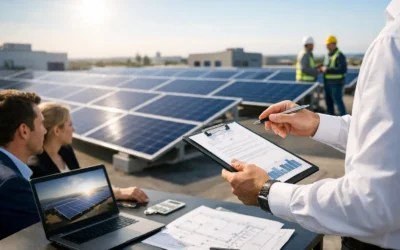
From there, the company develops a design, estimates production, and maps out the financial case. A strong proposal should explain expected savings, available incentives, project cost, timeline, and any assumptions that affect return on investment. If those numbers are vague or overly optimistic, that is a problem early in the process, not a detail to sort out later.
Commercial installers also handle engineering, permitting, utility coordination, procurement, construction, and commissioning. Some firms keep most of that work in-house, while others subcontract major parts of the project. Neither approach is automatically better, but it does affect quality control and communication.
Why choosing the right commercial solar installation company matters
Commercial solar is not a one-size-fits-all purchase. A small business with high daytime usage has different needs than a cold-storage facility, a church, or a multi-site portfolio owner. The right installer understands those differences and builds a project around how your property actually operates.
That matters because project value depends on more than system size. It depends on production, rate structure, incentive eligibility, roof condition, future maintenance, and how well the installation aligns with your load. A cheaper quote can become the more expensive option if the design underperforms or creates avoidable operational issues.
The right company also saves time. Business owners and facilities teams rarely want to chase permits, compare equipment line items, and decode utility requirements on their own. An experienced contractor simplifies decisions and keeps the process moving.
How to compare commercial solar installation companies
The fastest way to compare installers is to look past the headline price and focus on fit. Start with project experience. A company that mainly installs residential systems may not be the best choice for a large flat roof, complex electrical service, or multi-building commercial property.
Ask what types of commercial projects they handle most often. Retail, industrial, agricultural, nonprofit, and government projects each come with different design, compliance, and scheduling demands. Relevant experience usually shows up in better planning and fewer surprises.
Then look closely at the proposal itself. A solid bid should be clear about system size, estimated annual production, equipment brands, warranties, installation timeline, and expected savings. If one quote promises dramatically better performance than the others, ask why. It may reflect a genuine design advantage, or it may reflect aggressive assumptions.
Communication is another major differentiator. Commercial projects involve stakeholders, approvals, and scheduling constraints. You want a company that answers questions directly, explains trade-offs, and gives you a realistic view of timing. If the sales process feels slippery, the project process probably will too.
Questions worth asking before you sign
The best conversations with commercial solar installation companies are specific. Ask who will design the system, who will perform the installation, and who will manage permitting and utility interconnection. Ask whether they have completed projects similar in size and property type to yours.
You should also ask how they evaluate roof condition, structural capacity, and electrical infrastructure. A good installer will raise those issues early. If they do not, there is a chance the proposal is built to sell fast rather than to install cleanly.
Financial questions matter just as much. Ask how they model savings, which incentives are included, and what happens if assumptions change. If you are considering financing, ask how terms affect total project cost and payback. Cash purchase, loan structures, and third-party ownership can each make sense depending on your tax position and capital priorities.
Finally, ask what support looks like after installation. Monitoring, maintenance response, workmanship coverage, and service availability all affect long-term value.
Common differences between installers
Not all commercial solar providers are built the same. Some are strong regional contractors with deep local permitting knowledge and hands-on service. Others are larger firms with broader purchasing power and the ability to manage bigger, multi-site projects. The better option depends on your property, your timeline, and how much support you want before and after installation.
There are also differences in specialization. Some companies focus on standard rooftop systems. Others are better equipped for solar carports, battery storage, agricultural applications, or public-sector work. If your project has a special use case, specialized experience is often worth paying for.
Service approach varies too. One company may offer highly customized design and project consultation, while another follows a more standardized process to keep costs down. Standardization can be efficient, but highly complex sites often benefit from a more tailored approach.
Red flags to watch for
Some warning signs are easy to miss when savings projections look attractive. Be cautious if a company avoids site-specific questions, gives a quote without enough building and usage information, or pushes for a quick signature before key details are settled.
Another red flag is unclear responsibility. If it is hard to tell who handles engineering, permits, subcontractors, inspections, or warranty service, expect friction later. Commercial projects need accountability.
Watch for vague production estimates and broad promises about incentives. Tax benefits and local programs can be valuable, but they are not all available to every buyer in every situation. A trustworthy installer will explain what may apply to your project and where you should confirm details with your tax or financial advisor.
The role of quotes in finding the right fit
Getting multiple quotes is one of the smartest moves you can make, especially for commercial projects where design assumptions vary. A quote comparison helps you spot pricing differences, but more importantly, it helps you see how each company thinks.
One installer may maximize panel count. Another may prioritize simpler installation, stronger access planning, or better alignment with your daytime load. Neither is automatically right. The best option depends on your budget, building constraints, and operating goals.
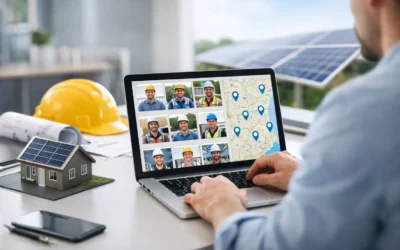
This is where a contractor directory can save serious time. Instead of searching blindly, you can narrow your options to companies that actually work in your project category and service area. If you are looking for a straightforward way to compare providers, Solar Contractors can help connect you with installers that match your property type and project needs.
What a good commercial solar partner helps you achieve
A good installer does not just sell equipment. They help you make a cleaner investment decision. That can mean lowering operating costs, improving budget predictability, supporting sustainability goals, or increasing property appeal for tenants and buyers.
For some organizations, the biggest benefit is simple monthly savings. For others, it is hedge value against rising utility rates. In agriculture or public-sector settings, solar may also support long-term planning by reducing dependence on volatile energy costs. The right contractor understands which outcome matters most to you and builds around it.
That is why the selection process deserves more than a quick price check. Commercial solar installation companies should be judged on clarity, relevant experience, design quality, and their ability to guide a project from idea to operation without adding confusion.
A smart solar project starts with a smart comparison. Take the time to ask better questions, review more than one proposal, and choose a partner that fits your property as well as your financial goals. The right company will make the next step feel practical, not complicated.