A roof can make solar feel easy or turn it into a project with extra costs, design changes, and installation limits. If you’re comparing options, understanding the best roof types for solar helps you avoid surprises and focus on the setups that usually deliver strong production, simpler installs, and better long-term value.
For most properties, the ideal roof is durable, has plenty of unobstructed space, and gets solid sun exposure throughout the day. That sounds simple, but roof material, pitch, age, orientation, and shading all matter. A homeowner with asphalt shingles has a different solar path than a warehouse owner with a flat membrane roof, and both differ from a farm building with corrugated metal.
What makes the best roof types for solar?
The best roof types for solar usually share three traits. First, they make mounting straightforward and secure. Second, they give installers enough room to place panels efficiently. Third, they support good sunlight exposure without major shade from trees, chimneys, neighboring buildings, or rooftop equipment.
Roof condition matters just as much as roof type. Even a great solar roof becomes less attractive if it needs replacement in a few years. Since panels are built to last decades, most property owners benefit from installing them on a roof with enough remaining life to match the system.
Pitch also affects performance and labor. Moderate slopes are often easier to work with than very steep roofs, and they can support good energy production depending on direction and local climate. Flat roofs can work very well too, especially on commercial buildings, because installers can use racking to optimize panel angle.
Asphalt shingle roofs are the most common fit
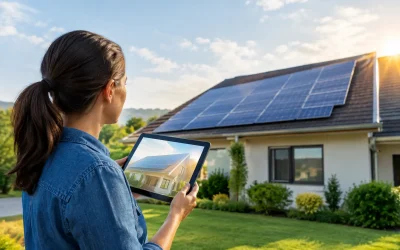
Asphalt shingle roofs are often one of the easiest and most cost-effective options for residential solar in the US. They are widely used, familiar to installers, and generally compatible with standard mounting systems. That usually means fewer installation complications and predictable labor.
For homeowners, this is often the baseline scenario contractors hope to see. If the roof is in good condition and has solid southern, southwestern, or southeastern exposure, asphalt shingles can support a smooth project and strong output.
That said, age matters. If your shingle roof is already nearing the end of its life, it may make more financial sense to replace the roof before adding panels. Removing and reinstalling solar later adds cost that many property owners would rather avoid.
Metal roofs are often among the best roof types for solar
Metal roofs are frequently considered one of the best roof types for solar because they are durable and, in many cases, especially installer-friendly. Standing seam metal roofs are a strong example. Installers can often use clamps that attach to the seams without drilling through the roof surface, which can reduce penetration concerns and speed up the process.
This is a major advantage for agricultural buildings, commercial properties, and some homes where long roof life and low maintenance are priorities. A metal roof can also pair well with solar because both systems are built for long-term performance.
Not every metal roof is identical, though. Corrugated or exposed-fastener metal roofs can still work well, but the mounting approach may differ and may involve more roof penetrations. That’s not automatically a problem, but it does make installer experience more important.
Flat roofs can be excellent for commercial solar
Flat roofs are common on commercial, institutional, and government buildings, and they can be very effective for solar. A flat roof gives installers flexibility. Instead of being locked into the roof’s natural angle, they can use racking systems to set the panel tilt and orientation that best fits production goals, wind load requirements, and available space.
This flexibility is useful for office buildings, warehouses, schools, municipal facilities, and retail properties. Flat roofs can also make access easier for maintenance teams and may allow for larger system sizes if the structure has enough usable square footage.
The trade-off is that flat-roof solar requires careful engineering. Panels must be spaced to prevent one row from shading another, and the roof must be able to handle added weight. Drainage patterns, HVAC units, skylights, and parapet walls can also reduce usable space. In other words, flat roofs are often a strong option, but layout planning matters more than many owners expect.
Tile roofs can support solar, but installation is more complex
Clay and concrete tile roofs are common in some parts of the country and can absolutely support solar. Still, they are rarely the simplest option. Tiles can break during installation if they are handled incorrectly, and mounting often requires more labor than asphalt or standing seam metal.
That added complexity can increase installation cost. It also makes it even more important to work with a contractor who has real experience with tile roof solar projects. A low quote is not always the best value if the installer is not comfortable working with the material.
For property owners with tile roofs, solar can still be a smart investment, especially in high-sun states. The key is making sure the roof is evaluated carefully and the mounting plan fits the roof’s structure and age.
Wood shake and slate are usually less ideal
Wood shake and slate roofs are generally less favorable for solar, not because solar is impossible, but because installation can be more delicate, more expensive, and more limited. These materials can be fragile, harder to penetrate properly, or more challenging to work around without damage.
In some cases, a contractor may still be able to install a system safely. In others, they may recommend roof replacement first or suggest a ground-mounted system instead. If you own a historic property, older home, or specialty building, this is where a tailored evaluation matters most.
Roof direction and shade can matter more than material
A great roof material does not guarantee great solar performance. Direction and shade often have a bigger effect on output. South-facing roof planes tend to be ideal in much of the US, but east- and west-facing roofs can still perform well, especially when utility rates, incentive structures, and daytime energy use line up in your favor.
North-facing roofs are usually less productive, though that depends on location, roof pitch, and project goals. Flat roofs can avoid some of these direction limitations because the racking can be adjusted.
Shade is one of the biggest variables to watch. A few trees may not ruin a project, but heavy or shifting shade can reduce production enough to change the economics. This applies to homes, commercial properties, barns, and public buildings alike.
Best roof types for solar by property type
For homeowners, asphalt shingles and standing seam metal roofs are often the most straightforward options. They usually offer the best mix of compatibility, cost control, and long-term performance when the roof is in good shape.
For commercial owners, flat roofs and metal roofs are often the strongest candidates because they can support larger systems and offer design flexibility. Warehouses, manufacturing buildings, offices, and retail sites can all benefit if the structure, layout, and utility profile support the investment.
For agricultural operators, metal-roof barns, equipment buildings, and outbuildings are often excellent solar candidates. These structures may offer broad roof spans and good sun exposure, which can support meaningful utility savings over time.
For government and institutional buyers, flat roofs on schools, municipal buildings, and administrative facilities are common solar opportunities. Here, structural review, procurement requirements, and long-term maintenance planning are just as important as roof type.
When a roof is not the best place for solar
Sometimes the right answer is not rooftop solar at all. If a roof is too old, too shaded, too small, structurally limited, or full of obstructions, a ground-mounted system may provide better performance and easier servicing. This comes up often on farms, large commercial sites, and public properties with available land.
That is why a good contractor does more than say yes to every roof. They look at the full picture – energy goals, structural conditions, site layout, budget, and long-term return.
How to evaluate your roof before getting quotes
Before you move forward, take a practical look at your property. How old is the roof? What material is it made of? Is there open, unshaded space where panels could go? Are there trees or rooftop units that block sun? These basic questions can help you have a more useful first conversation with an installer.
Photos help, but professional evaluation matters more. A qualified contractor can assess structural capacity, mounting options, electrical layout, and expected production. If you own multiple properties or manage a facility portfolio, that review can also help you prioritize which buildings are worth pursuing first.
If you’re unsure whether your building has one of the best roof types for solar, the fastest next step is getting input from a professional who installs systems on your type of property. Platforms like Solar Contractors make it easier to compare installers, request a Free Consultation, and Find A Contractor who understands residential, commercial, agricultural, or public-sector projects.
The best solar roof is not always the newest or the most expensive. It is the one that gives you reliable sun access, supports a secure installation, and sets up the project to pay off for years to come.