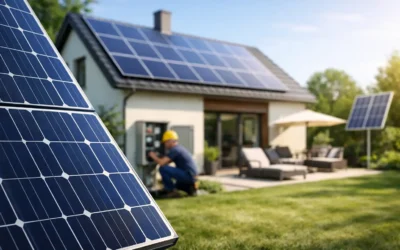
If you’re comparing roof mount vs ground mount solar, you’re already asking the right question. The best setup is not the one that looks better on paper – it’s the one that fits your property, budget, and energy goals without creating headaches later.
For some owners, the roof is the obvious place to start. For others, a ground-mounted array delivers better production and easier access. The real decision usually comes down to available space, roof condition, shading, installation cost, and how much flexibility you want over the life of the system.
Roof mount vs ground mount: what changes most?
At a basic level, both systems do the same job. They capture sunlight and turn it into usable electricity. What changes is where the panels sit and how much control you have over placement, angle, expansion, and maintenance.
A roof-mounted system uses your existing structure as the support base. That often makes it the more affordable option upfront because there is no separate framework or dedicated land prep. It also keeps the array out of the way, which matters for homes, commercial buildings, and facilities where ground space is limited or needs to stay open for parking, operations, or livestock.
A ground-mounted system is installed on a rack structure anchored into the earth. This usually costs more, but it gives your installer more freedom to place the panels in the best possible location for sun exposure. If your roof has poor orientation, multiple faces, obstructions, or aging materials, ground mount can be the stronger long-term investment.
When a roof-mounted solar system makes more sense
Roof mount is often the first option people consider because it uses space you already have. For many homeowners and businesses, that alone is a major advantage. If the roof is structurally sound, has good sun exposure, and has enough usable area, a roof-mounted system can deliver strong savings with a lower installation cost than a comparable ground setup.
This option tends to work well when the roof is newer or still has plenty of life left. It is also a practical fit for urban or suburban properties where yard space is tight. Commercial buildings with broad flat roofs may benefit even more, since they often provide a large installation area without affecting site operations.
There is also a visual and functional benefit. Panels mounted on the roof do not take up land that could be used for storage, equipment access, farming, recreation, or future development. For schools, offices, warehouses, and municipal buildings, that can be a real plus.
Still, roof mount is not automatically the better value. If your roof needs replacement in the near future, installing solar before that work can create avoidable extra cost. Panels may need to be removed and reinstalled later, which adds labor and project complexity.
When ground mount is worth the extra cost
Ground mount usually wins on flexibility. Your installer can place the array where sunlight is strongest, rather than forcing the design to match the roof. That can improve energy production, especially on properties with shaded roofs, awkward roof angles, limited roof area, or multiple obstructions such as vents, skylights, and HVAC equipment.
For agricultural properties, larger residential lots, commercial campuses, and government sites, ground mount can be especially attractive. If you have open land and high electricity demand, a ground-mounted system may make it easier to size the array for your actual needs instead of being limited by roof dimensions.
Maintenance is another reason some buyers lean toward ground mount. Panels are easier to inspect, clean, and repair when they are accessible at ground level. That matters more in dusty, snowy, or rural environments where regular upkeep may be part of protecting system output.
Ground mount can also be a good fit for future growth. If you expect your energy use to rise because of EV charging, facility expansion, irrigation needs, or electrification upgrades, a ground system may leave more room to expand later.
Cost: the most common deciding factor
If price is your main concern, roof mount often has the edge. Because it uses the existing roof structure, there is usually less material and labor involved. That lower upfront cost can shorten the payback period, assuming the roof is a good candidate and does not need major work.
Ground mount generally requires more site work, more steel or aluminum racking, and more labor. Depending on the property, there may also be costs for trenching, soil engineering, grading, fencing, or permitting requirements tied to the location of the array. Those factors can raise the total project cost meaningfully.
That said, lower cost does not always mean better return. If a roof-mounted system produces less power because of poor orientation or shade, the cheaper option may deliver weaker long-term savings. In some cases, a more expensive ground mount produces enough additional electricity to justify the difference.
This is where property-specific quotes matter. A contractor can compare expected production, installed cost, and payback for both options instead of relying on general assumptions.
Performance and energy output
If all else is equal, the better-performing system is the one placed at the best angle with the least shade. Ground mount often has the advantage here because installers have more control over positioning. They can orient the array for stronger solar exposure and, on some projects, use tracking systems that follow the sun during the day.
Roof systems are more constrained. The pitch, direction, and shape of the roof influence how the panels can be installed. If the best roof area faces the wrong way or gets afternoon shade from trees or nearby buildings, production can drop.
That does not mean roof mount performs poorly. Many roof-mounted systems generate excellent results, especially on south-facing or west-facing roofs with clear sun exposure. But if maximum production is the top priority, ground mount often gives you more design freedom.
Property use, appearance, and practical trade-offs
Some decisions come down to how you use your property. A roof system stays largely out of sight and preserves open land. For many homeowners, that makes the choice easier. For businesses, it can help keep loading areas, parking, and operational space clear.
Ground mount is more visible and takes up land, which may or may not be an issue. On a farm, a rear field installation may be easy to accommodate. On a smaller residential lot, it may feel intrusive or reduce usable yard space. Local zoning, setbacks, and homeowner association rules can also shape what is possible.
There is no universal winner here. If your roof is ideal and your land is limited, roof mount is usually the practical call. If your roof is compromised and you have open space, ground mount deserves serious consideration.
Which option is better for different property types?
For homeowners, roof mount is often the simpler and more affordable path, especially in neighborhoods where lot space is limited. Ground mount becomes more appealing on larger lots or when the roof has age, shade, or structural issues.
For commercial properties, it depends on the building and the site. Flat roofs can work very well, but a ground-mounted system may be better for campuses, industrial sites, and facilities with adjacent unused land.
For agricultural operations, ground mount is often a strong fit because farms may need larger systems and more design flexibility. It can also be easier to place arrays away from active work zones.
For schools, municipalities, and government facilities, the best choice usually comes down to site layout, procurement goals, and long-term maintenance planning. Ground systems can offer easier service access, while roof systems may minimize land use concerns.
How to make the right call
The fastest way to narrow this down is to look at three things first: your available space, your roof condition, and your target system size. If your roof is in good shape and can support the output you need, roof mount may be the most efficient purchase. If your roof is a compromise from the start, forcing solar onto it can limit savings.
A qualified installer should be able to model both options, estimate production, flag site constraints, and explain the trade-offs in plain English. That is where comparing contractors becomes useful. Different installers may have stronger experience with residential roofs, commercial flat roofs, farms, or large ground-mounted arrays.
If you are still weighing roof mount vs ground mount, the smartest next step is to get project-specific input before locking into a design. Find A Contractor, request a Free Consultation, and compare quotes from solar professionals who understand your property type. The right system should fit your site as well as your budget – and when those two line up, solar becomes a much easier decision.
A good solar project starts with an honest layout, not a guess. When you choose the setup that matches your property instead of forcing a one-size-fits-all answer, the savings tend to follow.