A roof is not always the deciding factor in solar. A shaded home, leased warehouse, historic building, or energy-hungry farm may still have a practical path to lower electricity costs. When weighing community solar versus onsite solar, the real question is which option best fits your property, utility account, budget, and long-term goals.
Both models can support cleaner energy and reduce exposure to utility-rate increases. But they work very differently. Onsite solar puts a generating system on your property. Community solar lets you subscribe to or own a share of a larger, offsite project and receive credits on your electric bill where state and utility programs allow it.
Community Solar Versus Onsite: The Core Difference
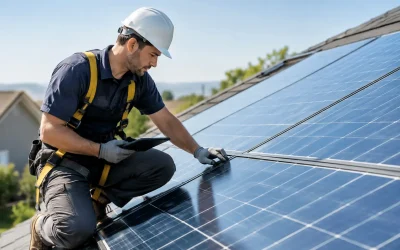
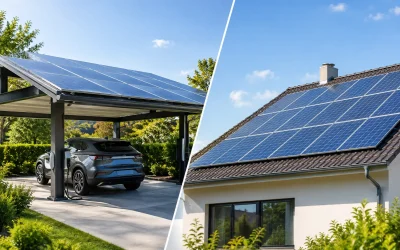
With onsite solar, panels are installed on a roof, carport, ground mount, or other usable area at your home, business, farm, or facility. The system produces electricity for the building it serves. Depending on local interconnection and net-metering rules, excess production may be exported to the grid for a bill credit.
Community solar is a shared solar project built elsewhere in the same utility territory. Participants generally receive a portion of the project’s output as credits on their monthly electric bills. You do not host the equipment, maintain it, or need a solar-ready roof.
That distinction shapes nearly every other decision. Onsite solar is usually a property improvement with greater control and a longer-term ownership opportunity. Community solar is often a simpler participation model with little or no upfront construction on your property.
When Onsite Solar Makes More Sense
Onsite solar is often the stronger choice for property owners with suitable space, consistent energy use, and a plan to remain at the property for years. It can be especially compelling for owner-occupied homes, commercial buildings, agricultural operations, schools, and public facilities that want direct control over their energy asset.
A well-designed onsite system can offset a meaningful share of daytime electricity use. For a business or farm with high loads during daylight hours, that alignment can improve the financial case. A dairy operation, irrigation pump, cold-storage facility, or manufacturing site may have enough predictable demand to make onsite generation particularly valuable.
Ownership is another major factor. Buyers who purchase a system may be able to use available federal tax incentives and, when applicable, state or local incentives. Businesses and tax-exempt entities may have different pathways to benefit, including direct-pay provisions or third-party project structures. Eligibility, tax appetite, program rules, and project timing all matter, so a qualified tax professional and solar contractor should review the details before you make a decision.
Onsite solar can also support broader property goals. Panels may improve a building’s appeal to tenants or buyers, help an organization meet sustainability targets, and create a foundation for future battery storage. If resilience during outages is a priority, an onsite solar-and-storage system can be designed for backup power. Solar panels alone generally do not keep a building powered during a grid outage, so backup capability requires the right equipment and system design.
The trade-off is that onsite solar requires a viable site. Roof condition, structural capacity, shading, orientation, available land, electrical equipment, zoning, permitting, and interconnection timelines can all affect cost and feasibility. A roof that will need replacement in a few years should usually be addressed before panels are installed.
When Community Solar Is the Better Fit
Community solar can be a practical alternative for people and organizations that want solar benefits without installing equipment. It is often a good fit for renters, condominium residents, tenants, properties with shaded or aging roofs, and organizations that do not want to manage a construction project.
For a business leasing its facility, community solar may avoid the landlord approvals and long-term property commitments involved with an onsite installation. For a homeowner whose roof faces the wrong direction or is covered by mature trees, it can provide access to solar-related bill credits without changing the home.
Many community solar programs use subscriptions. In a typical arrangement, your account receives utility bill credits tied to your allocated share of the project’s output, and you pay the community solar provider according to the subscription agreement. The savings structure varies. Some programs offer a discount on the value of credits, while others use a fixed or more complex pricing model.
Read the agreement closely. Ask whether there is a cancellation fee, a minimum contract term, an annual price escalator, a credit rollover policy, or a limit on how much of your electric use can be covered. Also ask what happens if you move, change utility accounts, or use less electricity than expected. Community solar is not available everywhere, and program rules differ substantially by state, utility, and service territory.
Compare the Numbers, Not Just the Sales Pitch
The best solar option is not automatically the one with the lowest starting cost. Compare the total value over the period you expect to own, occupy, or operate the property.
Onsite solar may require a significant upfront investment if purchased outright, though financing, leases, power purchase agreements, and other structures may reduce the initial cash requirement. The economics depend on system price, production, electricity rates, financing costs, maintenance expectations, incentive eligibility, and compensation for exported energy.
Community solar typically has a lower barrier to entry because there is no panel installation at your location. That convenience can be valuable, but participants generally do not own the project or gain the same direct control over an energy-producing asset. Savings may also be smaller or more variable than the savings from a well-sited, owned onsite system.
For commercial, agricultural, and government buyers, look beyond the monthly utility bill. Consider accounting treatment, procurement rules, capital budget constraints, depreciation, facility plans, and environmental reporting requirements. A project that looks attractive for a property owner may not work for a tenant, and a low-upfront-cost subscription may be the right answer for an organization with limited capital funds.
Questions to Ask Before You Choose
Start with your electric usage. Gather at least 12 months of utility bills, then identify when your building uses the most power. High daytime consumption can favor onsite solar, while a community solar subscription can work well for accounts without a viable installation site.
Next, assess the property honestly. Is the roof in good condition? Is there room for a ground-mounted array or solar carport? Are trees, neighboring buildings, or equipment creating shade? For farms, consider whether panels would compete with productive land, interfere with operations, or instead fit well on barns, equipment sheds, marginal acreage, or parking areas.
Then review your plans for the property. If you expect to move soon, sell the building, or relocate your operation, flexibility may matter more than long-term asset ownership. If you plan to stay for decades, the control and potential long-run value of onsite solar may be worth the added project work.
Finally, verify local program availability before assuming either path is open. Community solar requires an active program in your utility area. Onsite solar depends on site conditions and utility interconnection approval. A professional assessment can prevent you from spending time on an option that does not fit your location.
Getting Comparable Solar Quotes
For onsite projects, request proposals that clearly show system size, expected annual production, equipment, warranty coverage, estimated utility savings, financing assumptions, and any incentives included in the calculation. Do not compare proposals only by price per watt. A lower bid may use different equipment, omit electrical upgrades, or rely on optimistic production assumptions.
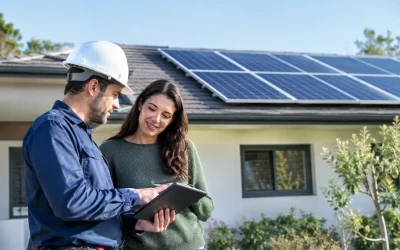
Ask prospective installers how they handle permitting, interconnection, roof coordination, monitoring, and service after installation. Commercial, agricultural, and public-sector projects may also require experience with larger electrical systems, engineering reviews, procurement processes, or specialized mounting conditions.
For community solar, compare the subscription terms with the same care. Confirm the provider’s relationship to the project, the estimated credit value, payment timing, contract length, portability, cancellation terms, and whether a credit check is required. Get the explanation in writing, especially when projected savings are presented as a percentage.
Solar Contractors can help property decision-makers find professionals who understand the needs of residential, commercial, agricultural, and public-sector projects. A few comparable conversations can make the difference between a generic proposal and a solar plan built around your actual energy use.
Choose the Option That Solves Your Real Constraint
If you have a sunny, durable site and want an energy asset tied to your property, onsite solar deserves a close look. If your roof, lease, budget, or location makes installation difficult, community solar may offer a straightforward way to participate without construction.
The right next step is simple: bring your utility bills, property details, and plans for the next several years to a qualified solar professional. A clear assessment will show whether your best solar opportunity is overhead, on nearby land, or in a shared project beyond your property line.