When irrigation costs keep climbing, every acre-foot of water gets more expensive to move. This agricultural solar irrigation guide is built for farm owners and operators who want a practical way to cut power costs, stabilize pumping expenses, and decide whether solar-powered irrigation makes financial sense.
Why farms are looking at solar irrigation now
For many agricultural operations, irrigation is one of the biggest ongoing energy expenses. Electric rates rise, diesel prices swing, and demand charges can make monthly utility bills hard to predict. Solar changes that equation by letting you generate power on-site where and when pumping demand is highest.
That does not mean every farm should install the same setup. Water source, pump size, seasonal demand, field layout, and local utility rules all affect the right system design. The goal is not to buy solar panels. The goal is to move water reliably at a lower long-term cost.
Solar irrigation can work especially well for farms with strong sun exposure, daytime pumping schedules, and high utility or fuel costs. It can also be attractive in remote areas where extending grid service would be expensive. If your operation already depends on predictable daytime irrigation windows, the economics often become easier to justify.
How agricultural solar irrigation systems work
At a basic level, a solar irrigation system uses photovoltaic panels to generate electricity for a water pump. That pump may pull from a well, pond, canal, or storage tank and deliver water through drip, pivot, sprinkler, or flood systems depending on the farm.
Some systems run directly from solar production during daylight hours. Others pair solar with grid power, batteries, or water storage so irrigation can continue when the sun is lower or demand shifts outside peak production hours. The best choice depends on how critical timing is for your crops and how much flexibility your irrigation schedule allows.
A direct solar pumping setup is often the simplest and least expensive option, but it works best when water demand lines up with sunny hours. A grid-tied system can give you more consistency and may reduce upfront complexity compared with battery storage. Batteries can be useful, but they add cost and maintenance, so they are not always the first place to start.
Start with water demand, not panel count
One of the most common mistakes is asking how many panels you need before defining how much water you need to move. A contractor should start with your irrigation profile, not a generic solar package.
That means looking at total daily and seasonal water requirements, pumping head, flow rate, pressure needs, and the hours you typically irrigate. A shallow lift with efficient drip irrigation is very different from a deep well feeding large sprinkler zones. Two farms with the same acreage can end up needing very different solar system sizes.
If your operation has variable demand through the season, that matters too. Some farms need intense pumping only during certain crop stages, while others run a more steady schedule. This affects whether solar should offset a portion of your load or support a larger share of your irrigation energy use.
Choosing the right system type
Off-grid solar irrigation
Off-grid systems are often used in remote fields where utility access is limited or costly. They can be a strong fit for livestock water pumping, smaller irrigation zones, and sites where a simple daytime pumping schedule works well. Their biggest advantage is avoiding trenching and utility extension costs.
The trade-off is flexibility. If weather changes, irrigation needs spike, or nighttime pumping becomes necessary, you may need storage tanks or batteries to maintain reliability.
Grid-tied solar irrigation
Grid-tied systems are common for farms already connected to utility service. They let you use solar production to offset electricity used by pumps while still drawing grid power when needed. For many larger operations, this is the most practical path because it balances savings with operational consistency.
The details depend on local interconnection rules, net metering policies, and your utility rate structure. Demand charges, in particular, can affect the value of the system. A good installer should explain how solar will change your bill, not just your panel output.
Hybrid systems with storage
Hybrid systems combine solar with batteries, generators, or water storage. These setups can make sense when irrigation timing is strict, power reliability is a concern, or the site has both energy savings and resilience goals. They are more complex, and that usually means higher upfront cost, but they can solve real operational problems in the right setting.
In many cases, storing water is cheaper than storing electricity. Pumping into a tank or reservoir during sunny hours and irrigating from storage later may offer a better return than adding a large battery bank.
What drives cost and return on investment
An agricultural solar irrigation guide would be incomplete without talking plainly about cost. Pricing depends on more than panel size. Pump horsepower, electrical upgrades, site access, mounting type, distance to the pump, trenching, controls, and permitting all shape the final number.
There is also a major difference between replacing diesel pumping costs and offsetting utility power. If you are moving away from diesel, fuel savings and reduced generator use can make payback more attractive. If you are offsetting grid electricity, utility rates and billing structure will play a bigger role.
Federal tax incentives may improve project economics, and some farms may also qualify for state or local programs. The exact value depends on ownership structure, tax appetite, and project type. This is where working with a contractor who understands agricultural projects matters. A farm is not a standard rooftop install, and the financial model should reflect real operating conditions.
Site factors that can make or break the project
Good sun exposure is the obvious one, but it is not the only one. Land availability, shading from trees or structures, soil conditions, and panel placement all affect performance and installation cost. Farms also need to think about equipment traffic, livestock access, dust, and long-term maintenance access.
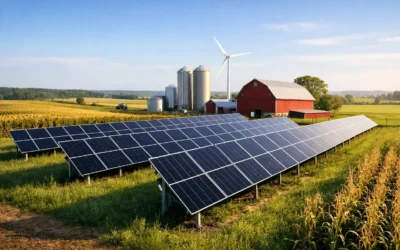
Ground-mounted arrays are often the best fit for agricultural irrigation because they can be placed near the pumping load and sized more flexibly than rooftop systems. But location matters. If the array is too far from the pump or in a flood-prone area, installation costs can rise quickly.
Water rights, well capacity, and local permitting should also be checked early. Solar may reduce the cost of pumping, but it does not change legal water limits or physical supply constraints. A strong project starts with both energy planning and water planning.
Questions to ask before you hire an installer
Not every solar contractor has agricultural experience. That matters because irrigation projects involve pumps, controls, field conditions, and seasonal operating patterns that differ from residential or standard commercial solar.
Ask whether the contractor has worked on agricultural pumping systems similar to yours. Ask how they size systems against actual irrigation demand. Ask what assumptions they are using for sun hours, pump runtime, and utility savings. You should also ask who handles engineering, permitting, and interconnection, and what ongoing service is available if output drops during peak season.
A good proposal should show expected production, estimated savings, system components, warranty coverage, and a realistic payback range. If the numbers look unusually aggressive, that is a reason to slow down and ask more questions.
If you are comparing providers, keep the comparison fair. Make sure each quote is based on the same water demand assumptions, the same pump profile, and the same utility rate inputs. Otherwise, lower pricing may simply mean less system capacity or unrealistic savings estimates. If you are ready to compare options, Solar Contractors can help you Find A Contractor and request a Free Consultation with installers who understand specialized project types.
When solar irrigation makes the most sense
Solar irrigation tends to be strongest when your farm has high daytime pumping demand, solid sun exposure, expensive utility or diesel costs, and enough project life ahead to capture long-term savings. It is also a strong candidate when grid extension costs are high or when you want more control over operating expenses.
It may be a weaker fit if your irrigation schedule depends heavily on overnight pumping, your site has major shading or space limits, or your current electricity costs are already low. That does not rule it out, but it changes the economics and the system design.
The right decision usually comes down to matching the system to the farm instead of forcing the farm to match the system. A well-designed project should support crop production first and energy savings second.
Agricultural solar irrigation guide: your next step
If you are serious about lowering irrigation energy costs, start by gathering a year of utility bills or fuel records, your pump specifications, and a clear picture of seasonal water demand. That gives a contractor something real to model and helps you avoid vague estimates.
Solar irrigation is not a one-size-fits-all upgrade, but for the right farm it can turn a volatile operating cost into a more predictable one. The smartest next move is simple: get a few qualified quotes, compare the assumptions, and choose a system that fits how your operation actually runs.