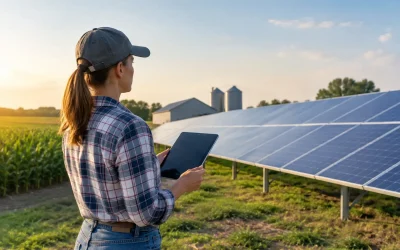
A solar project can lower operating costs for decades, but the outcome depends heavily on who designs and installs it. The right solar installers do more than place panels on a roof. They help you determine whether solar fits your property, explain the numbers clearly, handle permits and utility requirements, and build a system that performs as promised.
For homeowners, businesses, farms, and public entities, the goal is not simply to find the lowest quote. It is to find a qualified contractor with the right experience for the project, a transparent proposal, and a plan for support after installation.
What Solar Installers Actually Do
Solar installation is a coordinated construction and energy project. A contractor begins by assessing your site: available roof or land area, shade, roof condition, electrical equipment, energy usage, and local rules. From there, the installer develops a system design intended to meet your goals, whether that means reducing a household electric bill, stabilizing business energy costs, powering agricultural equipment, or supporting a municipal sustainability target.
A full-service provider typically manages system engineering, equipment selection, permit applications, installation, inspections, and utility interconnection. Some also coordinate financing options, battery storage, electric vehicle charging, or roof work when needed. The exact scope varies, so ask each company what is included rather than assuming every quote covers the same work.
This matters because a low initial price can leave out costs that appear later. Electrical upgrades, trenching, roof repairs, monitoring equipment, permit fees, or battery installation may be treated differently from one proposal to another.
Start With Your Property and Energy Goals
Before requesting estimates, gather a year of utility bills if possible. Monthly electricity use gives contractors a clearer picture of the system size your property may need. It also helps you recognize when one proposal is based on assumptions that do not match your actual consumption.
Your priorities should guide the conversation. A homeowner may be focused on predictable utility savings and home value. A retail center may want lower daytime demand charges. A farm may need solar that works around barns, irrigation loads, open land, and seasonal usage. A school, city department, or other public facility may be evaluating long-term budget stability, procurement requirements, and community impact.
Solar is not one-size-fits-all. A south-facing roof with limited shade may be straightforward, while an older roof, complex electrical service, historic district rule, or large ground-mount project requires more planning. Being clear about your goals helps contractors recommend an appropriate solution rather than selling the largest possible system.
How to Evaluate Solar Installers
The best comparison process looks beyond a company’s sales presentation. You are choosing a contractor that will work on a major property asset and may be responsible for your system’s performance for years.
Verify licensing, insurance, and local experience
Ask whether the contractor is licensed for the work required in your state and locality, carries current liability and workers’ compensation insurance, and uses employees or subcontractors for installation. Requirements vary by location, but a qualified installer should be comfortable explaining its credentials.
Local experience also has practical value. Contractors familiar with your utility, permitting office, building codes, and inspection process can often avoid preventable delays. For commercial, agricultural, and government projects, look for direct experience with your property type. A company that mainly installs residential rooftop systems may not be the best match for a multi-building facility or a large ground-mounted array.
Compare system design, not just panel count
Two proposals with the same number of panels can produce different results. Panel wattage, inverter type, roof orientation, shade exposure, system layout, and expected degradation all affect projected production. Ask each contractor to show the system size in kilowatts, the estimated annual energy production, and the assumptions behind the estimate.
A strong proposal explains what percentage of your current electricity use the system is expected to offset. It should also distinguish between estimated production and guaranteed performance, if a production guarantee is offered. Solar output changes with weather, seasonal conditions, and future electricity usage, so no responsible contractor should promise an exact utility bill every month.
Review equipment and warranties in plain language
You do not need to become a solar equipment expert, but you should know what is being installed. Ask for the panel manufacturer and model, inverter manufacturer and model, mounting system, monitoring platform, and battery details if storage is included.
Then separate the warranties. Product warranties cover defects in equipment. Performance warranties address panel output over time. Workmanship warranties cover installation-related issues. Make sure you understand who handles a warranty claim, how long workmanship coverage lasts, and whether the contractor will still be available to service the system.
Ask for a complete price and payment breakdown
A reliable quote states the total project price, payment schedule, expected timeline, equipment, and included services. It should identify whether tax incentives or utility incentives are already deducted from the displayed price or presented separately as potential savings.
Be especially careful with savings claims tied to financing. A monthly payment may look attractive, but the total financed cost can be substantially higher than the cash price. Ask for both figures. If you are considering a lease or power purchase agreement, ask who owns the system, who receives available tax benefits, how escalator provisions work, and what happens if you sell the property.
The right arrangement depends on your cash flow, tax situation, and long-term plans. A purchase may offer more control and potential financial upside, while third-party ownership can reduce upfront cost. A tax professional or financial advisor can help you assess how available incentives apply to your situation.
Questions Worth Asking Before You Sign
A conversation with prospective solar installers should leave you with clear answers, not more uncertainty. Ask who will obtain permits and submit the utility interconnection application, what happens if the roof needs repairs, and how long installation and final activation are expected to take.
Also ask how the company handles change orders. Unexpected electrical work or structural issues can arise, particularly on older buildings. The contract should explain when additional costs require your approval.
For businesses, farms, and public-sector buyers, ask about project scheduling, site access, safety planning, system monitoring, and maintenance responsibilities. If your operation cannot tolerate outages or work disruptions, make that requirement part of the initial project discussion.
Watch for Red Flags
Solar can be a financially smart investment, but pressure tactics are a reason to pause. Be cautious when a salesperson claims the program is “free,” says an incentive will disappear immediately without evidence, refuses to provide documents, or pushes you to sign before you can review the full contract.
Other warning signs include vague production estimates, missing equipment specifications, cash-only demands, a large upfront payment without a clear milestone schedule, or unwillingness to discuss licensing and insurance. A reputable contractor will give you room to compare options and ask questions.
It is also wise to confirm who will provide service after the installation. A system that is connected to the grid but not producing as expected needs a responsive point of contact. Monitoring is useful, but it does not replace a contractor that stands behind its work.
Make Quote Comparisons Easier
Requesting multiple quotes is one of the simplest ways to spot meaningful differences in price, design, and service. To compare fairly, ask each contractor to base its proposal on the same recent utility usage and your same project goals. Then place the key figures side by side: system size, expected production, equipment, warranty terms, total cash price, financed cost, estimated incentives, and installation timeline.
Do not assume the highest production estimate is the best answer. An aggressive forecast may rely on ideal conditions. Likewise, the lowest quote may use a simpler design, less extensive service coverage, or assumptions that do not fit your property. Look for a proposal you can understand and a contractor that can explain its recommendations without sidestepping practical questions.
Solar Contractors helps property decision-makers find professionals across residential, commercial, agricultural, and government projects so they can compare providers with less research time. A few well-matched consultations can give you a much clearer view of the system, budget, and contractor relationship that make sense for your property.
Choose a Partner, Not Just a Price
A solar system is expected to produce energy for many years, long after the sales meeting is over. The contractor you choose should make the process feel manageable: honest site assessment, clear documentation, realistic timelines, and responsive communication from design through activation.
When you are ready, request quotes from qualified solar professionals, compare the details carefully, and choose the installer that gives you the strongest combination of value, experience, and confidence. The right project starts with a conversation that answers your questions clearly and moves your property closer to lower energy costs and greater energy independence.