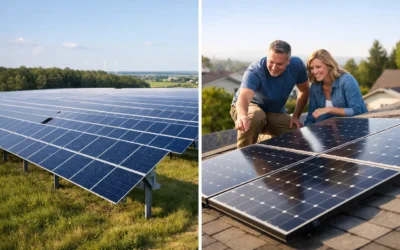
Sticker shock stops a lot of homeowners right before they say yes to solar. The system looks great on paper, the monthly utility savings make sense, and then the upfront price brings the whole decision to a halt. That is exactly why solar tax incentives for homeowners matter so much. They can reduce your effective cost, shorten your payback period, and make a project that felt borderline suddenly look like a smart long-term move.
If you are comparing quotes, this is one of the first numbers to understand correctly. Incentives can be substantial, but they are not all the same, and not every homeowner qualifies in the same way. A good installer can walk you through the details, but it helps to know the basics before you request pricing.
How solar tax incentives for homeowners usually work
The biggest incentive many homeowners hear about is the federal solar tax credit. In simple terms, this credit may allow you to claim a percentage of your eligible solar installation costs on your federal taxes. That percentage can make a meaningful difference, especially on a full system that includes panels, inverters, labor, and some related equipment.
The key point is that a tax credit is not the same thing as a rebate. A rebate usually reduces the price directly or gives money back after purchase. A tax credit affects what you owe in taxes. That distinction matters because your personal tax situation can affect how much value you receive and when you receive it.
For many homeowners, the federal credit is the foundation of the solar financial picture. State incentives, local programs, and utility offers may also be available, but those vary widely by location. In one ZIP code, you might see additional savings through a property tax exemption or utility rebate. In another, the federal credit may be the main financial benefit.
What costs may qualify
In many cases, eligible costs go beyond the panels themselves. System equipment, permitting, installation labor, electrical work tied to the solar project, and certain energy storage components may be included depending on current rules and your setup. This is one reason homeowners should not judge value based on panel price alone.
A lower quote is not always the better quote if it leaves out key work, uses weaker equipment, or fails to account for qualifying costs. On the other hand, a more complete system with stronger production and better workmanship may create better tax-credit value and better long-term savings.
This is where quote comparison matters. When you look at multiple proposals side by side, you can see not just the gross system price, but the likely net cost after incentives and the expected return over time.
Federal incentives are important, but timing matters
Tax incentives are powerful, but they do not always work like instant discounts. Many homeowners expect the benefit to hit the same day the system is installed. In practice, you may claim the credit when you file taxes, subject to current tax rules and your eligibility.
That means cash flow matters. If you are paying for the system upfront, you still need to cover the installation cost before the tax benefit is realized. If you are financing, your loan structure, monthly payment, and lender assumptions can all affect how the incentive fits into the deal.
This is also why clear conversations with your installer and tax professional are worth having early. If somebody presents incentives as guaranteed, immediate cash with no conditions, that is a sign to slow down and ask better questions.
State and local programs can change the math fast
Beyond the federal tax credit, some states and municipalities offer additional support. These programs may include tax credits, rebates, sales tax exemptions, property tax exclusions, performance-based incentives, or net metering policies that improve long-term savings.
The catch is simple: these programs are not consistent across the country. Some areas are very solar-friendly and have layered incentives that materially reduce cost. Others offer less direct support but still make solar worthwhile because utility rates are high or sunshine conditions are strong.
That is why broad national advice only goes so far. The numbers that matter most are the ones tied to your home, your utility, your roof, and your location. A homeowner in Arizona, New Jersey, and Florida may all be considering solar, but the final economics can look very different.
Ownership affects eligibility
One of the most common points of confusion is ownership. In many cases, solar tax incentives for homeowners apply when the homeowner owns the system, whether through cash or an eligible loan. If you lease the system or enter into certain power purchase agreements, the tax benefit often goes to the system owner rather than the homeowner using the electricity.
That does not automatically make leases a bad option. For some households, low upfront cost and predictable payments are the priority. But if your main goal is maximizing tax incentives and long-term financial return, ownership usually deserves a closer look.
This is where trade-offs matter. Leasing may simplify maintenance and reduce initial spending. Buying may offer stronger lifetime savings, better resale appeal, and direct access to available credits. The right fit depends on your budget, tax situation, and how long you expect to stay in the home.
Why installer quality matters as much as the incentive
A strong tax credit can make solar more affordable, but it does not fix a bad installation. If a system is poorly designed, underproduces, or creates roof and electrical issues, the incentive will not protect your investment.
Homeowners should treat incentives as one part of the decision, not the whole decision. The contractor matters. So does system design, equipment quality, warranty coverage, projected production, and the installer’s ability to explain your quote in plain English.
A trustworthy contractor should be able to show you estimated savings before incentives, after incentives, and over the expected life of the system. They should also explain what assumptions are built into those projections. If the numbers feel vague, overly optimistic, or rushed, keep shopping.
Questions to ask before you sign
The right questions can save you from expensive misunderstandings. Ask which incentives are currently available in your area, which system costs are expected to qualify, and whether the quote is showing gross cost or estimated net cost. Ask how ownership structure affects incentive eligibility. Ask what happens if your tax situation limits your ability to use the credit as expected.
You should also ask how net metering works with your utility, whether battery storage changes the financial picture, and what your projected payback period looks like under realistic utility-rate assumptions. Solar is a practical investment, so practical questions matter most.
Comparing quotes the smart way
The easiest way to get confused about solar pricing is to compare only the headline number. A better approach is to compare total installed cost, expected annual production, warranty terms, equipment quality, financing details, and estimated incentive impact.
A quote with a slightly higher upfront price may still deliver better value if it produces more power, uses more reliable components, and comes from a contractor with a stronger track record. At the same time, an aggressive sales pitch built around incentives alone can hide weak fundamentals.
If you are still early in your search, this is where a directory platform can help reduce friction. Instead of chasing random providers one by one, you can compare qualified installers, review options based on your project type, and move toward a Free Consultation with a clearer sense of what to ask.
Solar tax incentives for homeowners are a starting point, not the whole case
The real value of solar is not just that it may come with tax advantages. It is that those incentives can improve a project that already has strong fundamentals: lower utility bills, more predictable energy costs, potential property value benefits, and a cleaner energy profile for your home.
If the numbers work only because of incentives, take a closer look. If the numbers work even before incentives, and the credits make the return stronger, you are looking at a much more durable investment. That is the difference between buying into a sales pitch and making a financially smart home improvement.
A well-timed solar project can put you in a stronger position for years, but the best next step is not guessing. It is getting clear, location-specific quotes from professionals who can explain the costs, the incentives, and the real-world payoff for your property. When you are ready, Find A Contractor and start with numbers you can actually use.