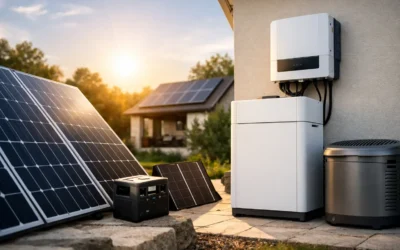
A few years ago, adding battery storage to a solar project still felt optional for most buyers. Now, solar storage adoption trends are shifting that mindset fast. Across residential, commercial, agricultural, and public-sector projects, storage is moving from a nice-to-have upgrade to a practical part of the conversation about energy costs, backup power, and long-term value.
That shift is not happening for just one reason. Utility rates are changing. Grid outages are getting more attention. Incentives have improved in many cases. At the same time, buyers are asking harder questions before they sign a contract: Will solar alone cover my needs, or do I need backup power too? If I am producing electricity during the day, how do I get more value from it after sunset?
For property owners, the key takeaway is simple. Storage is becoming easier to justify, but it is not automatically the right choice for every project. The strongest decisions still come down to usage patterns, local utility rules, project goals, and installer guidance.
Why solar storage adoption trends are accelerating
The biggest driver is economics, but economics now means more than the cost of panels. Many buyers are looking at their full energy picture, including peak demand charges, time-of-use rates, and the cost of downtime during outages. Storage gives them a way to keep more of the solar energy they generate and use it when power is most expensive or least reliable.
For homeowners, that often means backup power and better control over evening electricity use. For businesses, it may mean reducing demand charges or protecting operations during grid interruptions. For farms, storage can support critical equipment and add resilience during seasonal high-load periods. For government and institutional facilities, batteries can help support continuity planning, especially for sites that cannot afford extended outages.
The technology itself is also more familiar to buyers than it used to be. Batteries are no longer viewed as experimental. They are increasingly presented as a standard option during the quote process, which changes how people think about system design from the start.
Residential buyers are driving visibility
Homeowners have helped push storage into the mainstream, largely because the benefits are easy to understand. Backup power is a strong selling point, especially in regions dealing with extreme weather, wildfire-related shutoffs, aging grid infrastructure, or unstable utility service. A solar-plus-storage system can keep essentials running when the grid goes down, which makes the value feel immediate rather than theoretical.
There is also a lifestyle factor. More households want energy independence, or at least less exposure to utility rate hikes. When paired with smart energy management, storage can help families shift consumption away from expensive hours and make better use of their solar production.
Still, not every homeowner needs a battery. If outages are rare, net metering is favorable, and the budget is tight, solar alone may still be the better first step. In those cases, some buyers choose an installation design that allows storage to be added later.
Commercial and institutional projects are getting more strategic
Commercial solar buyers tend to look at storage through a different lens. Backup power matters, but the bigger conversation often centers on load management, demand charges, and operating continuity. A battery can improve the financial performance of a system if the building has the right usage profile and the utility rate structure rewards load shifting.
This is why commercial solar storage adoption trends vary widely by property type. A warehouse, office, school, retail site, cold storage facility, and manufacturing plant all use energy differently. The best storage case is usually tied to when power is consumed, how expensive peak usage is, and whether downtime creates real business risk.
For schools, municipal buildings, and public facilities, storage can also support resilience goals and emergency planning. That does not mean every public-sector site should install batteries, but it does mean storage is now part of more procurement discussions than it was even a short time ago.
Agriculture is a strong fit in the right conditions
Agricultural operators often have a practical view of energy investments. If a system lowers operating costs, protects critical functions, and pays off on a reasonable timeline, it gets attention. Storage can fit well here, especially for farms with irrigation loads, refrigeration, processing equipment, or remote operations where reliability matters.
What makes agricultural projects different is that energy use can be highly seasonal and highly specific. A battery that makes sense for a dairy operation may not make sense for row crop land with limited on-site electrical demand. The economics depend on timing, usage, and how much operational risk is tied to a power loss.
This is one reason specialized contractor input matters. A general solar pitch is not enough when the site has unique equipment, production schedules, or utility constraints.
Incentives are helping, but they are not the whole story
Federal incentives have made storage more attractive, and in some markets state or utility programs add more value. That has absolutely helped adoption. But incentives alone do not create a smart project.
The better way to think about them is as deal-improvers, not deal-makers. If storage solves a real problem, such as outage protection or expensive peak-hour energy use, incentives can improve payback and bring the numbers into range. If the battery does not match the site’s needs, even a strong incentive may not be enough.
This is where buyers can get tripped up. It is easy to focus on rebate headlines and miss the operating details that actually determine value. A qualified installer should be able to explain not just what incentives are available, but how storage will perform in your specific setup.
Utility rate design is shaping demand
One of the most important solar storage adoption trends is the growing influence of utility pricing. In areas with time-of-use billing, demand charges, or less favorable compensation for exported solar, batteries become more attractive because they allow more self-consumption.
That matters because the old assumption – produce extra solar during the day and send it to the grid for full value – is less dependable than it once was in some regions. As utility policies evolve, storage gives buyers more control over when and how they use their own energy.
This does not mean storage is always necessary where rate structures change. It means the project evaluation has to go deeper. A system that looked great on paper five years ago may need a different design approach today.
Buyers are asking better questions
Another clear trend is that buyers are more informed than they used to be. They are not just asking, “How much will solar cost?” They are asking, “What happens during an outage?” “Can I run critical loads?” “How long will the battery last?” “What does maintenance look like?” “Can I expand later?”
That is a good thing. Better questions lead to better project design. They also help separate contractors who can tailor a system from those who rely on generic proposals.
For anyone comparing quotes, the storage discussion should go beyond battery capacity and upfront price. It should include backup priorities, expected cycling, warranty terms, software controls, interconnection requirements, and whether the system is being designed for present needs or future expansion.
What these trends mean for your project
If you are evaluating solar now, storage should probably be part of the conversation even if you do not add it immediately. The market is moving toward more integrated energy planning, and batteries are becoming a more common way to improve resilience and financial performance.
That said, the right decision still depends on your property and goals. A homeowner worried about outages will evaluate storage differently than a business trying to reduce peak demand charges. A farm with critical overnight loads will view it differently than a municipal office building with lower operational risk.
The smartest next step is not guessing. It is getting quotes from contractors who understand your project type and can explain the trade-offs clearly. If you are comparing options, take the time to Find A Contractor who can model both solar-only and solar-plus-storage scenarios. A Free Consultation can help you see whether storage improves your return, strengthens your backup plan, or makes more sense as a future upgrade.
The market is clearly moving toward more storage, but good projects are still built one property at a time. The best choice is the one that matches how you use energy, what reliability means for your operation, and where you want your savings to come from over the long run.