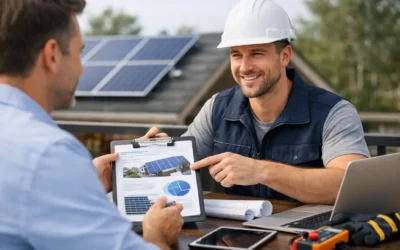
A salesperson knocks on your door, says your utility bill is about to spike, and offers a “free solar program” that expires tonight. That kind of pressure is exactly why homeowners, businesses, farms, and public buyers should know the most common solar panel scams to avoid before signing anything.
Solar can be a smart investment. Lower operating costs, predictable energy expenses, tax incentives, and stronger property value are real benefits. But fast-growing demand has also created room for bad actors who rely on confusion, urgency, and overly good promises. The goal is not to be suspicious of every installer. It is to know what legitimate providers do differently.
Why solar scams work
Most scam tactics are built around one simple fact: many buyers are still learning. A homeowner may not know how federal tax credits work. A facilities manager may not have time to compare technical proposals line by line. A farm operator may be evaluating solar for the first time while juggling dozens of other capital decisions.
That knowledge gap creates an opening. Instead of explaining system size, financing terms, equipment quality, and expected production clearly, a dishonest rep fills the conversation with vague savings claims and high-pressure deadlines. If the deal feels rushed or hard to verify, that is usually not an accident.
The most common solar panel scams to avoid
1. “Free solar” that is not actually free
This is one of the most common traps. The phrase sounds simple, but it often hides a lease, a power purchase agreement, dealer fees, escalator clauses, or a long-term contract that shifts savings away from the customer.
That does not mean leases or PPAs are always bad. In some cases, they are a practical fit for buyers who do not want to pay upfront. The problem is when a salesperson presents financing as if the system costs nothing at all. A trustworthy installer explains who owns the equipment, who gets the tax credit, how monthly payments work, and what happens if you sell the property.
2. Fake claims about tax credits and rebates
Federal, state, local, and utility incentives can make solar more affordable. Scammers know that, so they stretch the truth. Some imply that everyone qualifies automatically. Others inflate the dollar value of available incentives or present tax credits as cash rebates.
A tax credit reduces tax liability. It is not the same as a guaranteed check. For commercial, agricultural, and public-sector projects, the rules can get even more nuanced depending on ownership structure and eligibility. If someone uses incentives as the main selling point but cannot explain them clearly, slow down and verify the details before moving forward.
3. Utility impersonation
This scam is especially effective because it sounds official. A caller or canvasser may suggest they are working with your electric utility, that your account has been flagged, or that you are required to switch to solar to avoid higher rates.
Utilities do not typically send third-party sales reps door to door to force solar decisions. A legitimate installer will identify their company clearly and will not pretend to represent your utility, the government, or a rebate office. If there is any confusion, contact the utility directly using the number on your bill, not the number the salesperson gives you.
4. High-pressure same-day signing
Good solar projects hold up under review. Scam deals usually do not. That is why some sales reps push for same-day signatures, claim pricing disappears by midnight, or insist the crew is already routing through your area.
Urgency is not proof of value. It is often a tactic to stop you from comparing quotes, reading the contract, or talking to decision-makers. This matters even more for commercial and institutional buyers, where procurement, board approval, or facilities review may be required. A professional contractor understands that a serious investment deserves time.
5. Unrealistic savings guarantees
Solar can reduce energy costs, but exact savings depend on system size, electricity rates, roof orientation, shading, usage patterns, financing terms, and net metering rules. If a company promises that solar will eliminate your bill entirely or claims a fixed percentage of savings without reviewing your property, that is a red flag.
A solid proposal should show assumptions, estimated production, and the factors that could change results. Honest contractors talk about ranges, not magic numbers. They also explain that some customers still have utility connection charges or seasonal bill variation after installation.
6. Bait-and-switch equipment quotes
You may receive a proposal with premium panels, a top-tier inverter, and battery-ready design, only to find later that the contract allows substitutions. Sometimes this is framed as a minor supply issue. Sometimes it is never disclosed clearly at all.
Equipment changes are not always deceptive. Supply constraints happen. But substitutions should be disclosed in writing, with a clear explanation of performance, warranty, and cost differences. If the quote is vague about brands, model numbers, or production expectations, ask for specifics before you sign.
7. Misleading financing terms
Monthly payment talk can hide a lot. Some offers focus only on keeping the payment below your current utility bill while glossing over interest rate, dealer fees, prepayment penalties, or the total cost over time.
That is risky for any buyer, but especially for organizations managing large budgets or long-term facilities plans. A fair solar quote should make ownership cost transparent. Ask to see the cash price, financed price, loan term, APR, any fees, and whether projected savings depend on applying a tax credit by a certain date.
8. Fake or inflated production estimates
Production estimates should be based on site conditions, not wishful thinking. A scammer may ignore shading, roof angle, structural issues, or interconnection constraints just to make the numbers look better.
This kind of exaggeration can make a project seem stronger on paper than it will be in reality. For larger commercial, agricultural, or public-sector systems, that can affect ROI projections in a big way. If the estimate looks unusually strong, ask how it was calculated and whether a site visit is required before final design.
9. Deposits with no real project behind them
A deposit can be normal, but it should have a clear purpose. In scam situations, companies ask for large upfront payments before permits, engineering, financing approval, or equipment procurement are even in motion. Then communication slows down or disappears.
You should know exactly what the deposit covers, when it becomes nonrefundable, and what milestones trigger future payments. Vague payment schedules are a problem. So are requests to pay in cash, wire funds to a person instead of a business, or sign incomplete paperwork.
10. Door-to-door reps who overstep licensing or authority
Door-to-door marketing is not automatically a scam. Some legitimate solar companies use it. The issue is when the rep cannot answer basic questions, avoids written documentation, or acts like the sales pitch itself is the inspection.
A qualified installer should be able to explain licensing, project scope, timeline, warranties, and who will actually perform the work. In many cases, the company selling the project is not the same company installing it. That arrangement can be legitimate, but it should be disclosed clearly from the start.
How to protect yourself before signing
The best defense is a slower, cleaner buying process. Compare more than one quote. Read the full contract, not just the proposal summary. Ask who owns the system, who installs it, what equipment is included, and what assumptions drive the savings estimate.
It also helps to verify that the contractor works on your type of project. Residential solar and a ground-mounted agricultural array are not the same. Neither are rooftop commercial systems and public-sector installations with procurement requirements. Experience in your category matters because it affects design, permitting, incentives, and execution.
If a company avoids written answers, changes terms verbally, or pressures you to skip review steps, move on. A strong project should become clearer as you ask questions, not harder to understand.
What trustworthy solar companies do differently
Legitimate contractors are usually easy to spot once you know the contrast. They explain trade-offs. They talk through ownership options. They provide written details on equipment, financing, warranties, and expected timeline. And they do not treat comparison shopping like a threat.
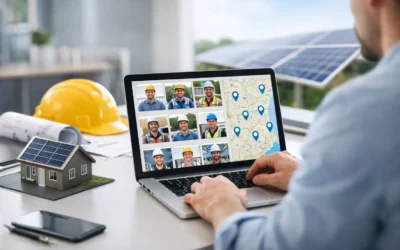
That is where getting multiple quotes can save money and reduce risk at the same time. A quote comparison helps you spot outliers, whether that means suspiciously high pricing, impossible savings claims, or missing contract details. If you are still evaluating providers, using a source that helps you Find A Contractor and request a Free Consultation can make the process more manageable.
Solar should feel like a practical upgrade, not a guessing game. The right installer will help you understand the numbers, respect your timeline, and build confidence before the first panel ever goes on the roof.