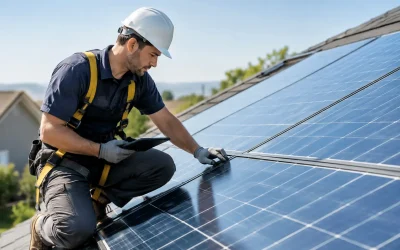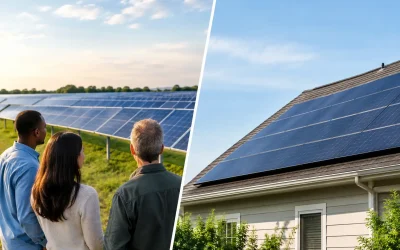
A solar proposal can make two panel types sound like a simple either-or choice. In practice, monocrystalline versus polycrystalline panels is a decision about available roof space, project budget, energy goals, and the products your installer can source. For many US property owners, monocrystalline panels are now the standard recommendation. That does not make polycrystalline panels a bad product – it means the better value depends on the full project, not the panel label alone.
Whether you are planning a home system, a commercial rooftop array, or solar for a farm operation, start with the output you need and the space you have to produce it. Then compare equipment and installation quotes on the same terms.
Monocrystalline Versus Polycrystalline Panels: The Core Difference
Both monocrystalline and polycrystalline panels use silicon solar cells to turn sunlight into electricity. The difference begins with how the silicon is made.
Monocrystalline cells are cut from a single silicon crystal. This more uniform cell structure helps electrons move efficiently, which generally allows the panel to produce more power from the same amount of roof or ground space. These panels usually have a black or very dark appearance.
Polycrystalline cells are made from multiple silicon fragments melted together. They are commonly recognized by their blue, somewhat speckled appearance. The manufacturing process historically used less energy and created less silicon waste, helping polycrystalline panels reach a lower price point.
That manufacturing distinction affects efficiency and appearance, but it is not a complete measure of panel quality. A well-designed solar system also depends on inverter selection, roof orientation, shading, mounting design, electrical upgrades, and the experience of the installation team.
Efficiency: Why Space Often Decides the Answer
Panel efficiency describes how much incoming sunlight a panel can convert into usable electricity. Modern monocrystalline panels commonly fall in roughly the 19% to 23% efficiency range, with some premium products exceeding that range. Traditional polycrystalline panels more often fall around 15% to 18%.
The difference matters most when your usable installation area is limited. A homeowner with a small roof, a business with rooftop equipment, or a facility with shaded sections may need higher-wattage monocrystalline panels to meet its energy target. More output per square foot can reduce the number of panels needed and make the layout cleaner.
If your property has ample open land or a large, unobstructed roof, lower-efficiency panels may still meet your production needs. For example, a farm with room for a ground-mounted system may have more flexibility than a homeowner trying to offset a large electric bill from a compact roof.
Efficiency is also not the same as annual production. Two panels with different efficiency ratings can produce similar energy if the system designs, orientations, and installed capacities differ. Your quote should estimate annual kilowatt-hour production, not simply list the panel wattage.
Cost: Compare the Installed System, Not Just Panel Prices
Polycrystalline panels have traditionally cost less per panel than monocrystalline options. However, monocrystalline manufacturing has expanded rapidly, and pricing has changed. In many current US residential and commercial projects, the upfront gap is smaller than buyers expect. Polycrystalline choices may also be harder to find because many manufacturers have shifted their production toward monocrystalline technologies.
The right question is not, “Which panel is cheapest?” It is, “Which system delivers the best cost per expected kilowatt-hour for this property?” A less expensive panel can require more panels, more racking, more labor, and more space to reach the same production target. A higher-efficiency panel may cost more initially but reduce the number of modules required.
Installed cost also includes permits, engineering, interconnection, electrical work, monitoring equipment, labor, and any roof or site preparation. These costs do not necessarily fall in proportion to the panel price. That is why comparing a few detailed quotes is more useful than deciding based on a single equipment specification.
For commercial, agricultural, and public-sector buyers, also consider how the system fits your capital plan. A larger footprint may affect operations, parking, equipment access, future building work, or land use. The lowest equipment price is not always the lowest project cost.
Appearance and Property Fit
For many homeowners, appearance is a meaningful factor. Monocrystalline panels usually provide a uniform black finish that blends more easily with dark roofing materials. Polycrystalline panels tend to look blue and more visibly patterned. Neither style changes the basic purpose of the system, but curb appeal can influence a property owner’s comfort with the project.
On a warehouse roof, agricultural building, or ground mount that is not visible from the street, aesthetics may carry less weight. In those cases, system economics, structural requirements, and available area often matter more.
There is another practical fit issue: panel dimensions. High-output monocrystalline modules can be physically larger or heavier than older residential panels. That is not automatically a problem, but installers must design around roof geometry, setbacks, wind loads, access paths, and structural capacity. Ask how the proposed panel size affects the final layout instead of assuming a higher-wattage module will always fit better.
Performance in Heat, Shade, and Real Conditions
Solar panels produce less power as temperatures rise. Monocrystalline panels often have slightly better temperature coefficients than polycrystalline models, meaning they may lose a little less output on very hot days. This can be valuable in sunny southern climates or on roofs that hold heat, but the difference is usually not large enough to make the decision by itself.
Neither panel type performs well under significant shade. Chimneys, trees, neighboring buildings, vent stacks, and seasonal shadows can reduce production. Depending on the project, a contractor may recommend module-level power electronics, a revised layout, tree trimming, or a different installation location. Good shade analysis is more valuable than a broad claim that one cell type “works in shade.”
Also look beyond the monocrystalline or polycrystalline label. Newer monocrystalline products may use technologies such as PERC, TOPCon, half-cut cells, or bifacial designs. Those features can affect output, low-light behavior, and price. The panel type is a useful starting point, not the final comparison.
Warranties, Longevity, and Manufacturer Strength
Most quality solar panels are built for decades of service and come with two key warranties: a product warranty covering defects and a performance warranty addressing long-term power output. Terms vary by manufacturer and model. A longer warranty can be reassuring, but it should be considered alongside the manufacturer’s history, financial stability, and process for handling claims.
Ask each installer to provide the panel model number, product warranty length, performance warranty terms, inverter warranty, and workmanship coverage. This makes quotes easier to compare and helps prevent surprises after installation.
A strong contractor should also explain who will support the system if an issue occurs. Equipment warranties are only useful when you know how service requests will be handled.
Which Panel Type Is Right for Your Project?
Monocrystalline panels are usually the better fit when roof or site space is tight, appearance is important, or you want to maximize production from a limited footprint. They are also the most common option in today’s market, which can provide more choices across panel sizes, wattages, and advanced cell technologies.
Polycrystalline panels can still make sense when they are available at a meaningful discount and the property has enough room to accommodate the additional panel area. They may be especially worth evaluating for larger, less visible installations where space is abundant and the projected cost per kilowatt-hour is favorable.
The decision can change from one property to the next. A homeowner with a small roof may benefit from premium monocrystalline panels, while an agricultural operation with ample land may prioritize total project economics. A school, municipality, or business may need to balance energy savings with procurement rules, timeline, and long-term maintenance planning.
Get Quotes Built Around Your Property
Do not let a generic panel comparison decide a project that will operate for 25 years or more. Request proposals that show system size, expected annual output, equipment models, warranty coverage, financing assumptions, and total installed price. If one quote uses monocrystalline panels and another uses polycrystalline panels, compare the estimated production and project cost side by side.
Solar Contractors can help you find professionals who understand residential, commercial, agricultural, and public-sector solar needs. A free consultation with qualified installers gives you a clearer picture of what fits your roof, land, budget, and energy goals.
The best solar panel is the one that delivers reliable production and a sensible return for your specific property. Find a contractor, ask direct questions, and choose the system design that makes the numbers work for the long run.