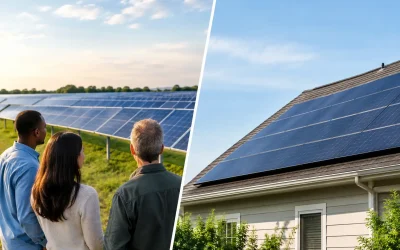
A carport solar vs rooftop decision usually starts with a practical question: where can your property generate the most useful electricity for the money? Rooftop panels use space you already have. Solar carports turn parking areas into a power-producing asset while adding shade and weather protection. The better choice depends on your roof, parking layout, energy use, budget, and long-term plans for the property.
For many homeowners, rooftop solar is the simpler path. For businesses, schools, farms, apartment communities, and public facilities with large parking areas, a solar carport can deliver benefits that a roof cannot. A qualified solar contractor can evaluate both options and show you what the numbers look like for your specific site.
Carport Solar vs Rooftop: The Core Difference
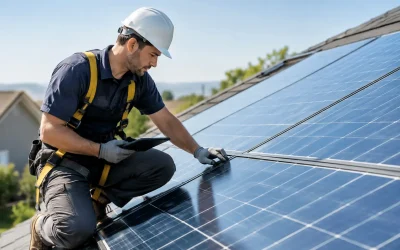
Rooftop solar panels are mounted on an existing building roof. Because the structure is already in place, installation generally requires fewer materials and less site work than a carport system. That often makes rooftop solar the lower-cost option when the roof is in good condition, properly oriented, and free from major shade.
Solar carports are elevated structures built over parking spaces, drive lanes, or equipment areas. Panels sit on top of the new structure, usually high enough to preserve vehicle clearance. The project includes steel or aluminum supports, foundations, drainage considerations, electrical work, and engineering designed for local wind, snow, and seismic conditions.
That added construction cost matters. But so do the added benefits. A carport can shade vehicles, make a customer or employee parking area more comfortable, support EV charging, and create a visible statement about energy savings and sustainability.
When Rooftop Solar Is the Better Investment
A sound, relatively new roof with broad unshaded areas is a strong candidate for solar. Roof-mounted systems use otherwise idle space without changing parking circulation, landscaping, or the look of the ground-level property. For a typical home, this is often the most direct way to reduce utility bills.
Rooftop solar can also work well for warehouses, retail buildings, agricultural buildings, and municipal facilities with large flat roofs. Flat commercial roofs allow installers to position arrays at carefully selected angles, although row spacing may be needed to prevent one panel row from shading another. Low-slope roofs also require a close review of drainage, membrane condition, and wind loading.
The major advantage is economics. Since you are not paying to build a separate canopy structure, rooftop solar often delivers a lower installed cost per watt. That can improve payback, especially where electricity rates are high and the building has steady daytime energy demand.
Still, rooftop solar is not automatically the best deal. A roof nearing the end of its useful life should generally be repaired or replaced before panels go up. Removing and reinstalling panels for a reroof adds cost and disruption later. Chimneys, HVAC equipment, skylights, vents, roof setbacks, and neighboring trees can also reduce usable area enough to change the calculation.
When a Solar Carport Makes More Sense
Solar carports make the most sense when roof space is limited, unsuitable, heavily shaded, or simply not enough to meet the property’s energy goals. They are particularly compelling for properties where parking is abundant and electricity use is high during the day.
A retail center, medical office, manufacturing site, university, multifamily community, or government facility may have acres of open parking but little usable roof area. A carport turns that parking footprint into generation capacity without taking land away from operations. For agricultural operations, a carport can also cover vehicle, equipment, or fleet parking where protection from sun and weather has real value.
Shade is more than a comfort feature. Covered parking can lower cabin temperatures, protect interiors from UV exposure, and make a site more appealing to employees, customers, tenants, and visitors. In hot regions, shaded parking may support broader cooling and sustainability goals, even though it does not directly reduce the building’s electric load in every case.
Carports also pair naturally with electric vehicle charging. The same parking area can provide solar generation, EV charging infrastructure, and a more useful customer or employee amenity. If your organization expects fleet electrification or increased EV use, planning the solar and charging systems together can avoid costly rework.
Cost, Output, and Payback Considerations
The most common comparison is simple: rooftop solar usually costs less to install, while carport solar usually costs more but does more for the site. The price difference can be substantial because carports require foundations, structural steel, elevated electrical routing, engineering, and sometimes site drainage or pavement modifications.
Energy production is not determined by mounting type alone. Panel direction, tilt, shading, local weather, equipment selection, and system size have a bigger impact. In some cases, a carport array can be oriented more favorably than a constrained roof. A building roof might face east and west, while a carport can be designed with an orientation that better matches local solar conditions and the property’s afternoon demand.
A carport may also allow a larger system if the roof has limited capacity. More generation can be valuable, but only if it aligns with your electricity use, utility rules, and financial objectives. Oversizing a system without understanding net metering, rate structures, demand charges, and export compensation can weaken the expected return.
Federal, state, local, and utility incentives may reduce the net cost of either type of project. Eligibility and value can vary by taxpayer status, project ownership, location, equipment, and program requirements. Commercial, agricultural, and public-sector projects may have additional financing or incentive considerations. Your contractor and tax professional can help clarify which options apply before you make a final commitment.
Site Challenges That Can Change the Answer
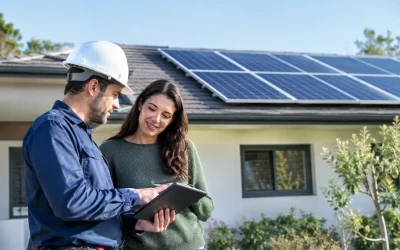
A quality solar proposal starts with a site assessment, not a generic price per panel. For a rooftop project, the contractor should evaluate roof age, structural capacity, material type, access, obstructions, electrical service, and likely production. For a carport, the review expands to include parking layout, vehicle clearance, underground utilities, soil conditions, fire access, stormwater flow, and local zoning requirements.
Permitting can be more involved for carports because they are new structures. Some jurisdictions treat them as significant site improvements, particularly if they affect setbacks, parking counts, accessibility routes, lighting, or drainage. A rooftop system can have its own permitting challenges, but it often has fewer land-use issues.
Construction disruption is another practical factor. Rooftop work may affect building access and require temporary safety controls. Carport construction can close portions of a parking lot, reroute traffic, and require excavation. For an active business or public facility, staging plans and installation timing deserve as much attention as equipment selection.
A Practical Way to Compare Proposals
Ask installers to model rooftop and carport options using the same assumptions wherever possible. Compare estimated annual production, installed cost, incentives, financing terms, utility-bill savings, maintenance expectations, and projected payback. Do not judge proposals by system size alone. A larger array is not necessarily a better investment if it produces energy at the wrong time or exceeds the value your utility will credit.
For commercial and institutional projects, also ask about demand-charge reduction, future battery storage, EV charging capacity, roof warranty coordination, and expansion options. For homeowners, focus on roof condition, shading, household electricity use, financing, and the timeline for future needs such as an electric vehicle or heat pump.
It is wise to compare more than one contractor, especially for a carport project. Experience with ground work, structural engineering, parking-lot logistics, and commercial permitting can matter as much as panel brand. Request clear assumptions and a scope that identifies what is included, from design and permits to electrical upgrades and final commissioning.
Choose the Asset That Fits Your Property
If you have a healthy, sunny roof and want the lowest-complexity path to solar savings, rooftop panels are often the right starting point. If your roof is constrained and your parking areas are an underused asset, a solar carport may justify its higher upfront cost through added generation capacity, covered parking, and EV-ready infrastructure.
The strongest decision comes from a site-specific comparison, not a one-size-fits-all rule. Find A Contractor through Solar Contractors to request a free consultation and compare qualified professionals who can price the option that makes the most sense for your property.