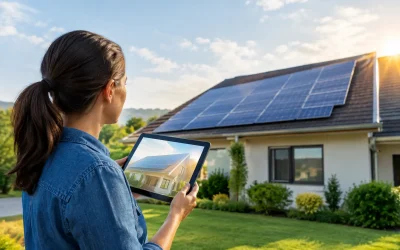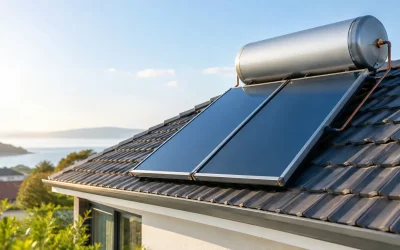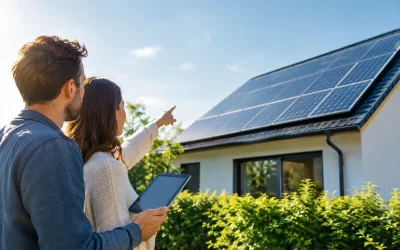
If your electric bill keeps climbing while utility rates stay unpredictable, asking are solar panels worth it is not theoretical – it is a budget question. For many US property owners, the answer is yes, but not for exactly the same reason. A homeowner may care most about lower monthly bills, while a business, farm, or public facility may focus on long-term operating costs, incentives, and energy stability.
The real value of solar comes down to math, property fit, and installer quality. Solar can deliver strong returns, but it is not automatic. The right system on the right building can pay for itself over time and keep producing savings for decades. The wrong setup, poor pricing, or limited sun exposure can stretch that timeline enough to make the project less attractive.
Are solar panels worth it in 2026?
For many properties, yes. Solar panels are often worth it when you have decent sun exposure, enough usable roof or land area, and electricity costs high enough to make offsetting utility usage meaningful. Federal tax incentives also improve the numbers, and in some states or utility territories, local rebates and net metering policies can push the value even higher.
That said, worth it does not always mean cheap upfront. Solar usually makes the most sense as a medium- to long-term investment. If you expect to hold the property for several years, want more predictable energy costs, and can capture available incentives, solar tends to look stronger. If your roof needs replacement soon, your energy use is very low, or shading is severe, the case becomes less compelling.
What makes solar worth it or not
The biggest factor is your current electric bill. Properties with higher energy consumption usually have more to gain because each kilowatt-hour produced by solar replaces utility power that would otherwise be purchased at retail rates. A small apartment-style load profile will not see the same impact as a large home, warehouse, poultry barn, office, or school building.
Your location matters too. States with high electricity prices and strong sunlight often create faster payback periods. But a sunny state alone does not guarantee a great outcome. Utility rules, rate structures, and local installation costs affect results just as much.
System price is another major variable. Two properties with the same roof and energy usage can see very different returns depending on equipment quality, financing terms, and installer pricing. That is one reason quote comparison matters. When you can evaluate multiple proposals side by side, it becomes easier to spot inflated costs, weak production estimates, or financing that looks attractive upfront but costs more over time.
Finally, your roof or site condition can make or break the economics. A newer roof with clear southern or western exposure is usually ideal for homes and many commercial buildings. Ground-mount systems may work better for farms, campuses, and larger parcels where roof geometry is less favorable.
The financial case for different property types
Homeowners
For homeowners, solar is often worth it when the goal is to reduce monthly utility bills and lock in lower energy costs over time. The federal tax credit can significantly reduce net project cost, and in many markets, buyers also like the idea of a home with lower operating expenses. That can help resale appeal, especially where energy prices are high.
Still, not every home is a perfect solar candidate. Heavy tree coverage, a small or aging roof, or low electricity usage can reduce the benefit. If you plan to move very soon, your payback window may be too short to capture the full value yourself.
Commercial properties
For businesses, the question is usually less about ideology and more about cash flow. Are solar panels worth it for a commercial building? Often, yes, because energy is a recurring operating expense, and reducing that expense can improve margins for years. Warehouses, offices, retail centers, and industrial properties with large daytime loads can be strong candidates.
Commercial buyers may also benefit from depreciation and other tax advantages, depending on their tax situation. The savings can be meaningful, but the project should be evaluated carefully against business capital priorities, demand charges, and building ownership structure.
Agricultural operations
Farms often have strong solar potential because they may have open land, barns, workshops, storage buildings, irrigation loads, or processing equipment that consume substantial electricity. For agricultural operators, solar can help stabilize overhead in an industry where margins are often tight and energy-intensive operations can be hard to predict.
The best setup depends on the operation. A dairy, grain facility, or greenhouse has different usage patterns than a row-crop farm with seasonal pumping needs. The right contractor can size the system to the operation instead of applying a one-size-fits-all estimate.
Government and institutional buyers
Schools, municipal buildings, and other public facilities often evaluate solar through a long-term budget lens. Reducing utility costs can free up funds for core operations, and public-facing sustainability goals can support the decision as well. Here, procurement, contracting structure, and timeline often matter as much as panel performance.
How long does it take for solar to pay off?
This is where many buyers focus first, and for good reason. Payback periods vary based on system cost, incentives, local utility rates, and solar production. Some projects recover costs in a relatively short period, while others take longer but still generate worthwhile long-term savings.
A fast payback is attractive, but it should not be the only goal. A system with slightly longer payback may still produce better lifetime value if the equipment is stronger, the warranty is better, and the installer has a more accurate production model. Cheap proposals can look good on paper and disappoint later.
Financing also changes the equation. Paying cash usually produces the strongest lifetime return, but loans can still make sense when monthly payments are lower than current electric bills or when preserving capital matters more than maximizing total savings. Lease and power purchase structures may work for some buyers, though they deserve careful review because ownership, tax benefits, and long-term value are not the same.
The hidden variable: installer quality
A lot of solar disappointment starts before installation ever begins. Aggressive sales tactics, vague production claims, and poor system design can turn a good opportunity into a frustrating one. That is why the answer to are solar panels worth it is partly a contractor question.
A trustworthy installer should evaluate your roof or site, review your energy usage, explain realistic production, and break down total cost without hiding key details in financing language. They should also understand your property type. A residential specialist is not always the best fit for a commercial roof, and a generalist may not be ideal for agricultural or public-sector work.
This is where comparing qualified providers can save time and money. Instead of relying on the first sales pitch, you can review multiple options, ask better questions, and choose a contractor with the right experience for your project. If you are ready to move from research to real numbers, Find A Contractor and request a Free Consultation to compare quotes built around your property.
When solar may not be worth it
Solar is not the right answer for every property. If your roof will need replacement soon, it may be smarter to handle that first. If shading is extensive and cannot be addressed, production may be too low to justify installation. If your utility offers weak compensation for excess generation and your usage is minimal, savings may be limited.
There are also cases where timing matters. A business with uncertain tenancy, a homeowner planning to relocate quickly, or a public buyer facing near-term capital constraints may decide to wait. That does not mean solar is a bad idea. It means the project needs to fit your timeline and financial priorities.
How to decide if solar is worth it for you
Start with your last 12 months of electric bills. That gives a much clearer picture than guessing. Then look at the condition of your roof or available land, your expected time in the property, and whether you can use tax incentives effectively.
From there, get multiple quotes. The differences can be surprisingly large, not only in price but also in system size, equipment, warranty coverage, and projected output. A good proposal should make the savings case easy to follow without requiring you to decode fine print.
The smartest solar buyers do not ask only, “Will this lower my bill?” They ask, “Is this system sized correctly, priced fairly, and designed for how my property actually uses power?” That is the question that leads to a confident decision.
Solar is rarely about chasing a perfect scenario. It is about finding a practical one where your property, energy use, and project cost line up well enough to create real value over time. If that fit is there, solar can be one of the more durable improvements you make – not because it sounds good, but because the numbers hold up.