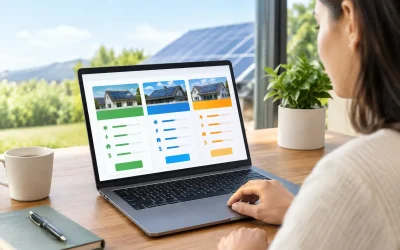
A public solar project is not just a facilities upgrade. It can reduce operating costs for years, put more predictable energy spending into the budget, and demonstrate responsible stewardship to residents. This government solar project planning guide helps municipalities, school districts, counties, agencies, and public institutions move from an early idea to a project that is ready for procurement.
The strongest projects begin before an installer is selected. Clear goals, usable site data, a realistic funding strategy, and a fair contractor review process will protect the public investment and give decision-makers confidence in the outcome.
1. Define the public purpose and project goals
Start by deciding what the project must accomplish. Lower utility costs may be the primary goal, but it is rarely the only one. A city may want more budget certainty. A school district may want a visible sustainability project and a teaching opportunity. An emergency operations center may prioritize backup power during outages.
Put those priorities in writing and rank them. This prevents the project from being judged only by the lowest upfront price when resilience, long-term production, or public benefits matter more.
Establish practical targets early, such as the percentage of annual electricity use the system should offset, a desired payback range, expected system life, and whether battery storage is part of the plan. Also identify who has authority to approve funding, contracts, site access, and interconnection agreements. Public projects can lose months when these roles are unclear.
2. Start with energy data and a site screen
Twelve to twenty-four months of utility bills provide the foundation for system sizing. Look at total consumption, demand charges, rate structures, seasonal peaks, and planned changes in building use. A recreation center adding electric vehicle charging, for example, may need a different solar design than its current bills suggest.
Next, screen potential locations. Rooftops, parking canopies, land adjacent to public buildings, wastewater facilities, and closed landfills can all be candidates. Each option has different costs and benefits. Rooftop arrays often use existing space, while parking canopies can provide shade and make solar highly visible. Ground mounts may allow easier maintenance and larger systems, but they require available land, drainage review, and security planning.
A preliminary screen should consider roof age and structural capacity, shading, orientation, electrical equipment condition, access for construction, easements, environmental constraints, and local zoning. Do not assume a large roof is automatically a good solar roof. If replacement is likely within 10 years, coordinating roof work before installation can avoid expensive removal and reinstallation later.
3. Choose the right ownership and funding model
Government entities have more solar financing options than many buyers realize, but the right choice depends on procurement rules, available capital, tax status, and risk tolerance.
Direct ownership gives the agency control over the equipment and the full value of future energy savings. It can be a strong fit when capital funds are available and staff can manage long-term operations. Tax-exempt entities may also be able to use direct-pay clean energy tax credits where eligible. Requirements, credit amounts, labor standards, domestic content rules, and filing procedures can change, so confirm the current rules with qualified tax and legal advisors before counting incentives in the budget.
A power purchase agreement, or PPA, lets a third party own and operate the system while the public entity buys the electricity it produces under a long-term contract. This can reduce upfront costs and shift some performance responsibilities to the provider. The trade-off is less direct control and a contract that must be carefully reviewed for pricing escalators, buyout terms, site obligations, and end-of-term options.
Leases, energy savings performance contracts, grants, bonds, and state or utility incentives may also fit the project. Avoid building the financial case around a grant that has not been awarded. A better approach is to create a base case that works without uncertain funds, then show how awarded incentives improve results.
4. Build the project team before procurement
Solar decisions affect more than the facilities department. Include finance, procurement, legal counsel, risk management, sustainability staff, building operations, IT or cybersecurity personnel when monitoring systems are involved, and the department that controls the proposed site.
For larger or more complex projects, an independent solar consultant or owner’s representative can help develop specifications, evaluate proposals, and oversee construction. That added cost can be worthwhile when it helps the agency compare bids on equal terms and avoid preventable change orders.
Utility coordination should begin early. Interconnection timelines, transformer upgrades, export limits, and net-metering rules can materially affect project economics. Ask the utility what studies, applications, deposits, and construction work may be required. A contractor can support this process, but the public owner should understand the schedule risk before announcing an operating date.
5. Write a procurement package that gets comparable bids
A vague request for proposals tends to produce vague pricing. A useful procurement package defines the site, project goals, desired ownership model, available energy data, structural reports, required permits, insurance requirements, prevailing wage obligations where applicable, and scoring criteria.
It should also state whether proposals must include electrical upgrades, roof repairs, battery storage, monitoring, operations and maintenance, training, warranties, and performance guarantees. If these items are not addressed, one bid may appear cheaper simply because it excludes work another bidder included.
Do not score contractors on price alone. Evaluate relevant government or institutional experience, licensing, financial stability, safety record, design quality, equipment warranties, projected annual production, construction schedule, and approach to interconnection. Ask bidders to explain their assumptions. Production estimates should identify shading losses, system degradation, weather data, and whether they reflect any expected curtailment.
For agencies that need help locating qualified solar professionals, Solar Contractors can simplify the early search by connecting project teams with installers that serve government and commercial projects. Multiple quotes are most useful when every contractor is responding to the same project requirements.
6. Compare value, not just installed cost
The lowest dollar-per-watt number is not always the lowest-cost public project. A lower-priced system may use less favorable equipment, omit a needed service-panel upgrade, carry weaker labor assumptions, or offer limited support after commissioning.
Compare the expected lifetime value of each proposal. Review total installed cost, annual savings, utility-rate assumptions, incentive treatment, maintenance costs, warranty coverage, degradation assumptions, and contract escalation terms. If storage is included, evaluate the value of backup power separately from bill savings. Batteries can be highly valuable for critical loads, but they do not always produce the shortest financial payback.
Ask for a clear cash-flow model and sensitivity analysis. What happens if electricity rates rise more slowly than forecast? What if the utility requires an upgrade? What if the project is delayed six months? A proposal that remains reasonable under conservative assumptions is generally easier to defend in a public approval process.
7. Plan for construction, commissioning, and long-term accountability
Once a contractor is selected, confirm the construction sequence around public operations. Schools, courthouses, public safety facilities, and water plants may have restricted access windows, security protocols, or periods when outages are unacceptable. The contractor’s schedule should account for these realities before equipment is ordered.
Require documented commissioning before final acceptance. The owner should receive permits, inspection approvals, as-built drawings, equipment manuals, warranty documents, monitoring access, emergency shutdown information, and training for facilities staff. Verify that the monitoring portal is owned or accessible by the agency, not only by the installer.
The project also needs a long-term operating plan. Assign someone to review production alerts and utility bills, establish how warranty claims will be handled, and budget for routine inspections or cleaning when site conditions warrant it. Solar systems need relatively little maintenance, but ignored monitoring can allow a performance issue to continue unnoticed.
Keep the project moving with early decisions
Public solar projects gain momentum when leaders can explain the purpose, costs, risks, and expected benefits in plain language. Start with solid utility data, select sites that can support the intended use, and ask contractors to price the same scope. That preparation makes approvals easier and puts your agency in a stronger position to turn available sunlight into lasting public value.