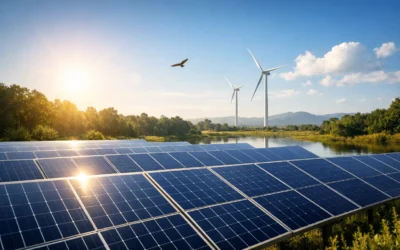
A solar project does more than lower a utility bill. For many property owners, the environmental benefits of solar energy are part of the reason the investment makes sense in the first place. Whether you manage a home, warehouse, farm, school, or municipal building, solar can reduce your reliance on fossil-fuel-generated electricity and shrink the environmental impact tied to everyday operations.
That matters because the power your property uses is not abstract. It comes from a grid that still depends heavily on natural gas, coal, and other conventional sources in many parts of the US. When a solar system produces electricity on-site, it helps offset that demand with a cleaner source of power.
Why the environmental benefits of solar energy matter
Most buildings and facilities consume electricity every day without much visibility into how it is produced. Lighting, refrigeration, irrigation controls, office equipment, ventilation, and heavy-duty machinery all add up. If that electricity comes from carbon-intensive generation, your property indirectly contributes to greenhouse gas emissions, air pollution, and water use at power plants.
Solar changes that equation. Panels generate electricity without combustion, which means they do not release carbon dioxide, sulfur dioxide, nitrogen oxides, or particulate pollution while operating. That is the central environmental value of solar – cleaner energy production at the point of use.
For property owners, this has a practical side too. Environmental performance is no longer a side issue for many buyers, tenants, employees, and public stakeholders. A cleaner energy profile can support sustainability goals, improve reporting metrics, and strengthen the long-term value of a property or organization.
Lower greenhouse gas emissions
The biggest environmental win is reduced carbon emissions. Traditional electricity generation often depends on burning fossil fuels, and that process releases greenhouse gases that contribute to climate change. Solar energy produces power from sunlight, not fuel combustion, so operating emissions are extremely low.
Over the life of a system, that reduction can be significant. A residential array can offset a meaningful share of a household’s annual electricity use. On a commercial roof or agricultural site, the avoided emissions can be much larger because energy demand is often higher and more consistent.
There is a fair nuance here. Solar panels are not emission-free from cradle to grave. Manufacturing, transporting, and installing equipment all require energy and materials. But when you compare lifecycle emissions, solar still performs far better than coal and natural gas in most scenarios. The environmental payback usually happens well before the system reaches the end of its useful life.
Cleaner air for local communities
One of the most immediate environmental benefits of solar energy is cleaner air. Fossil-fuel power plants can emit pollutants linked to smog, respiratory irritation, cardiovascular problems, and other public health concerns. Those impacts are felt most directly in the communities near generation facilities and along fuel supply chains.
When more electricity comes from solar, the grid can rely less on polluting power sources, especially during daylight hours when demand is often high. That does not mean every kilowatt-hour of solar directly shuts down a specific fossil plant in a simple one-to-one way. Grid operations are more complicated than that. But higher solar adoption does help reduce the need for generation from dirtier sources over time.
For schools, hospitals, local governments, and businesses with public-facing sustainability goals, cleaner air is an environmental outcome people can understand right away. It connects the benefits of solar to everyday quality of life, not just long-range climate targets.
Lower water use than conventional power generation
Many buyers focus on emissions first, but water is another major part of the environmental picture. Conventional power plants often use large amounts of water for cooling and steam generation. In regions facing drought, water stress, or growing agricultural demand, that matters.
Solar photovoltaic systems use little to no water to generate electricity. Panels may need occasional cleaning, especially in dusty or dry environments, but their operational water demand is far lower than many conventional energy sources. For farms, commercial sites in arid regions, and municipalities planning for resource resilience, this can be a meaningful advantage.
The exact impact depends on the local grid mix. If your utility already relies heavily on low-water generation sources, the water savings from solar may be less dramatic. Even so, on a national level, shifting more electricity production to solar supports a lower-water energy system.
Less pressure on land and ecosystems from fuel extraction
Traditional energy does not only affect the environment at the power plant. It also has upstream impacts from drilling, mining, transportation, and processing. Fuel extraction can disrupt habitats, fragment landscapes, generate waste, and create spill or contamination risks.
Solar avoids much of that ongoing extraction cycle because sunlight does not need to be mined, refined, or transported. Once a system is installed, its fuel source arrives every day without trucking, pipelines, or excavation. That is a quieter but important environmental benefit.
Of course, land use still matters with solar. Large utility-scale projects can create siting concerns if they are poorly planned. For many property owners, though, solar is installed on rooftops, carports, barns, or previously developed land. In those cases, the project can generate clean electricity without opening up new areas for fuel production.
A better fit for distributed, local power generation
Solar also supports a more distributed energy model. Instead of relying entirely on centralized plants located far from where power is used, homes and organizations can produce electricity closer to the point of consumption. That reduces transmission losses and can make the overall system more efficient.
There is an environmental angle here that often gets overlooked. A more distributed grid can reduce the need for some new transmission infrastructure and help communities diversify how they meet demand. It is not a replacement for the broader grid, and not every property can offset the same share of energy use. But local generation gives building owners a direct way to participate in cleaner power production.
This is especially relevant for businesses, farms, and public facilities with large roof space or open land. Those properties may be able to turn underused space into productive energy infrastructure with measurable environmental value.
Solar and storage can strengthen the impact
Solar on its own delivers clear environmental gains, but pairing it with battery storage can make those gains more useful in practice. Storage allows a property to hold excess daytime production and use it later, which can reduce dependence on higher-emission grid electricity during evening peak periods.
That said, storage is not automatically the right move for every project. Costs, usage patterns, local utility rules, and backup power goals all matter. Some properties will see strong environmental and operational value from adding batteries, while others may do better starting with solar alone. A qualified contractor can help model those trade-offs based on your site.
The long-term environmental case is also a business case
For many decision-makers, environmental impact and financial performance are tied together. Cleaner energy can support ESG targets, customer expectations, public procurement standards, and internal sustainability commitments. In some sectors, it can also strengthen brand reputation and make a property more attractive to tenants or buyers.
That does not mean every solar project pencils out the same way. Roof condition, shading, utility rates, system size, and incentives all affect results. But when a project is designed correctly, the environmental benefits are not separate from the business case – they reinforce it.
A homeowner may see this as a way to reduce household emissions while gaining more control over energy costs. A business may view it as both an operating expense strategy and a visible sustainability improvement. A farm may value lower utility costs, reduced water-system pressure, and better long-term resource stewardship. Government and institutional buyers may need all of the above, plus public accountability.
Choosing the right solar path for your property
The environmental upside of solar is real, but outcomes depend on project quality. System design, installer experience, equipment selection, and local permitting all shape performance. A poorly planned installation can leave savings and environmental value on the table.
That is why it helps to compare contractors who understand your property type. Residential, commercial, agricultural, and public-sector projects all have different requirements. If you are evaluating your options, getting multiple quotes can clarify what size system makes sense, how much electricity it can offset, and what the likely environmental impact will be over time.
Solar Contractors helps connect property owners with professionals who can evaluate those details and recommend a practical path forward. If you are ready to move from research to action, Find A Contractor or request a Free Consultation to compare options built for your project.
Cleaner power is not just a headline benefit. It is a measurable change in how your property uses energy, how much pollution it helps avoid, and how prepared you are for a future that rewards efficient, lower-impact operations.