
Does solar increase property value? In many cases, yes. A properly installed, owned solar panel system can make a home more attractive to buyers, reduce long-term electricity costs, and support a higher resale value.
Solar panels are often viewed like other major home improvements. Similar to a remodeled kitchen, upgraded HVAC system, or energy-efficient windows, solar can add value when buyers understand the savings and the system is in good condition.
According to Lawrence Berkeley National Laboratory solar home value research, buyers have paid a premium for homes with owned solar photovoltaic systems. The study analyzed nearly 23,000 home sales and found that buyers were consistently willing to pay more for homes with solar installations. The U.S. Department of Energy also notes that solar panels may be viewed as an upgrade and that buyers have paid around $15,000 more for homes with an average-sized solar system.
If you are thinking about installing solar before selling your home, start by comparing contractor pricing, equipment options, warranties, and projected energy savings. You can begin here: compare solar installation quotes.
How Much Does Solar Increase Home Value?
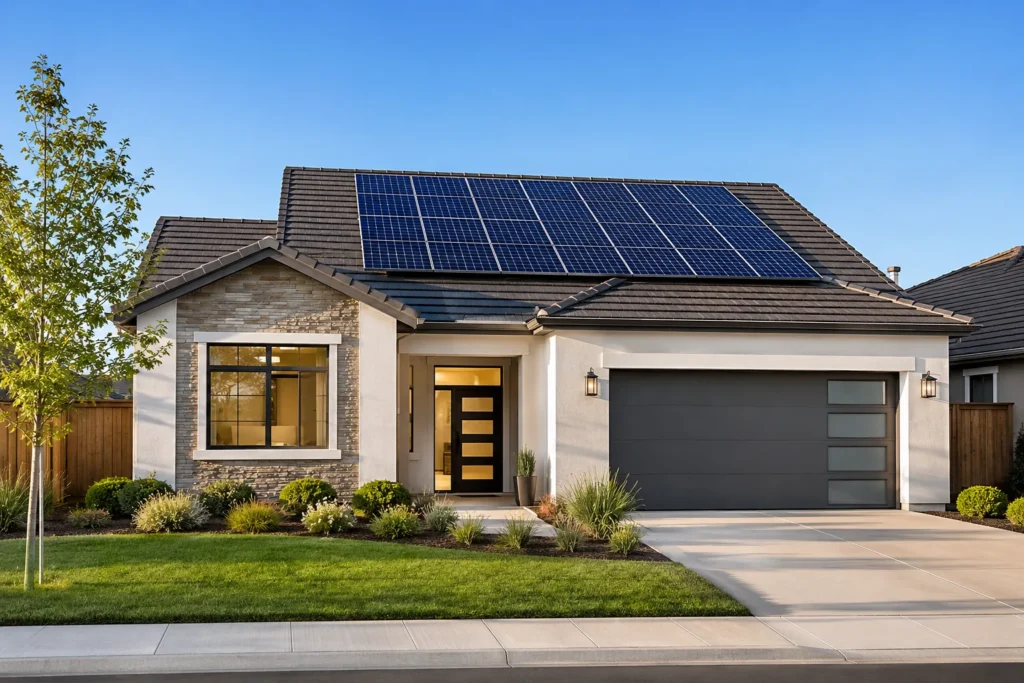 The amount solar increases home value depends on several factors, including your location, electricity rates, system size, roof condition, solar ownership type, and the local real estate market.
In strong solar markets, buyers often see value in a home that already has a working solar energy system. This is especially true when the system is owned outright, has a clean installation history, and includes transferable warranties.
A solar property value increase is usually strongest when the system reduces monthly electric bills. Buyers are more likely to pay attention when the seller can show actual utility savings, production reports, and system documents.
For example, a homeowner with high electric bills may see more buyer interest than a homeowner in an area with low electricity costs. Solar value is closely tied to how much money the system can help save over time. Learn more about how much solar panels save and how energy savings can influence resale value.
Why Solar Panels Increase Home Value For Many Buyers
Solar panels can increase home value because they offer something buyers already care about: lower monthly costs. A home with solar may help reduce electricity bills from the first month of ownership.
Many buyers are also attracted to solar because it provides more predictable energy costs. Instead of relying only on utility rates, a solar system can offset part of the home’s electricity usage while delivering many long-term environmental and financial advantages.
Solar can also improve the overall appeal of a property. A buyer comparing two similar homes may prefer the one with owned solar, especially if the roof is newer, the system is efficient, and the seller has clear documentation. Homeowners who want to learn more about the environmental impact of renewable energy can read our guide on environmental benefits of solar energy.
Owned Solar vs. Leased Solar And Property Value
Ownership matters. Owned solar panels usually add more value than leased solar panels.
When the solar system is owned, the buyer typically receives the benefit of the system without taking over a separate lease payment. This can make the home easier to market and easier to explain during the sale.
Leased solar can still offer energy savings, but it may create more questions during the sale. Buyers may need to qualify for the lease transfer, review payment terms, and understand contract obligations.
If you plan to sell your home, gather these documents before listing:
- Solar ownership documents
- Installation agreement
- Warranty information
- Utility savings history
- Solar production reports
- Permit and inspection records
Does Solar Increase Property Value In California?
Solar can be especially attractive in California because electricity rates are often high and many buyers are familiar with rooftop solar. In markets where buyers understand solar, a clean and well-documented system may help a home stand out.
California homeowners should also understand that solar value depends on the system type, net billing rules, utility provider, battery storage, and the home’s actual energy usage.
If the home has solar plus battery storage, that may add another layer of buyer appeal because batteries can help store solar energy and provide backup power during outages.
To learn more about solar benefits, you can also read: environmental benefits of solar energy.
Does Solar Increase Property Taxes?
Solar may increase property value, but property tax treatment depends on your state and local rules. Some states offer property tax exclusions or exemptions for solar energy systems, while others may treat improvements differently.
Before installing solar, check with your local tax assessor or state energy office. This is especially important if you are installing a large system or solar plus battery storage.
For general solar energy information, visit the U.S. Department of Energy residential renewable energy guide.
Solar Panels And Home Appraisals
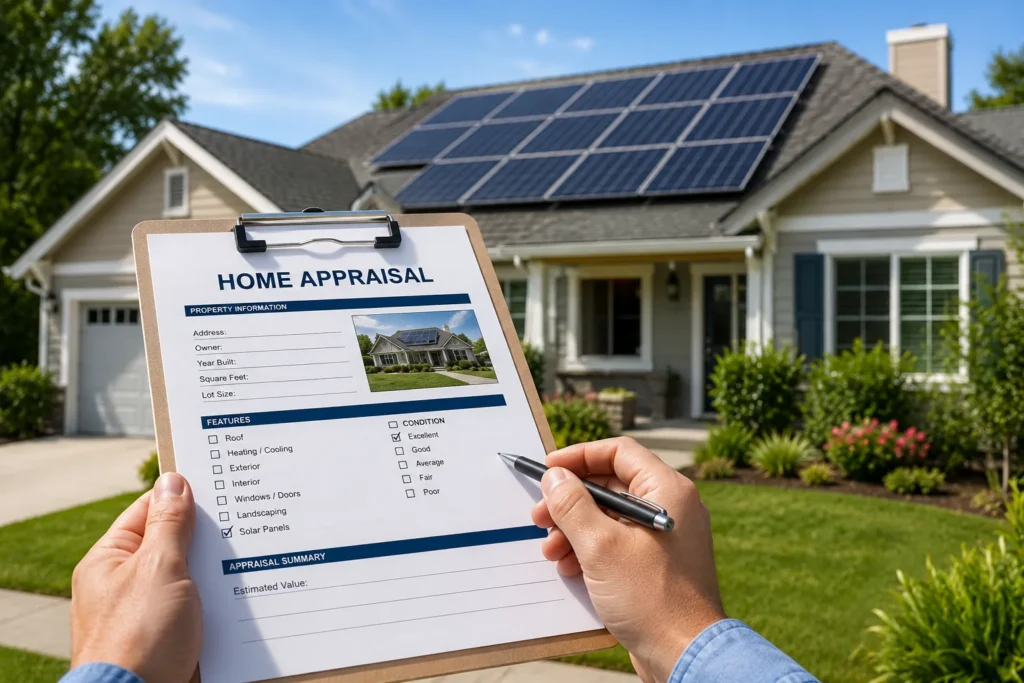 Solar panels can affect a home appraisal when the appraiser can properly evaluate the system. Appraisers may look at ownership status, system age, energy output, equipment quality, utility savings, and comparable sales.
The biggest mistake homeowners make is failing to provide documentation. If the appraiser does not have enough information, the solar system may not receive full consideration.
Before an appraisal, prepare a simple solar packet that includes:
- System size in kilowatts
- Panel and inverter brands
- Installation date
- Ownership status
- Warranty details
- Past utility bills
- Solar monitoring reports
- Permit records
This helps show that the solar panels are not just equipment on the roof. They are a working energy improvement that may reduce the home’s cost of ownership.
States Where Solar May Add The Most Value
Solar panels often add the most value in states where electricity costs are high, sunlight is strong, and buyers are already familiar with solar. Some of the strongest solar markets include:
- California
- Arizona
- Nevada
- Florida
- Texas
- New Jersey
- New York
- Massachusetts
However, location alone does not guarantee a higher resale price. A properly sized system with good equipment, clean installation, and strong documentation will usually perform better than an older or poorly explained system.
When Solar May Not Add As Much Value
Solar does not automatically increase property value in every situation. Some systems add less value because of age, lease terms, roof problems, poor installation quality, or low local electricity rates.
Solar may add less value if:
- The system is leased instead of owned
- The roof needs replacement soon
- The system is too small for the home
- The equipment is outdated
- The installation has visible issues
- The seller cannot provide documents
- Local buyers do not understand solar savings
If your roof is near the end of its life, it may be better to replace the roof before installing solar. Removing and reinstalling panels later can add extra cost.
How To Maximize Solar Resale Value
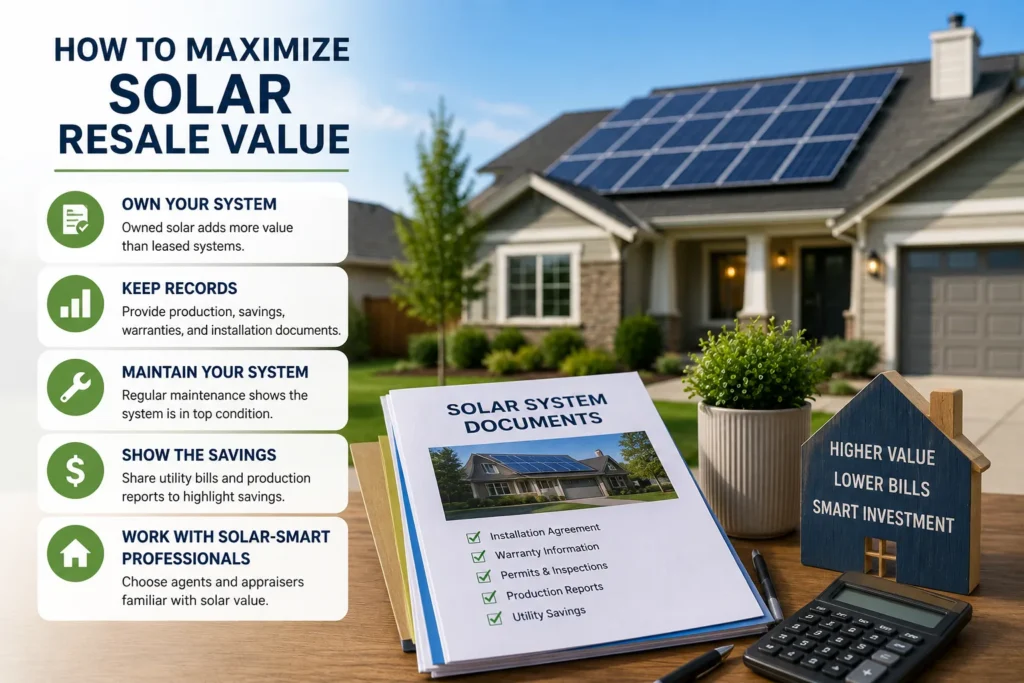 To get the best solar resale value, focus on quality, documentation, and buyer education.
First, choose a qualified solar contractor. A clean installation from a reputable company gives buyers more confidence. You can learn more here: how to find solar contractors near me.
Second, keep detailed records. Buyers want proof that the system works and that it saves money.
Third, explain the benefits clearly in the listing. Mention the system size, ownership status, estimated savings, warranty coverage, and whether battery storage is included.
Fourth, compare quotes before installing. Overpaying for solar can reduce your return on investment. Homeowners should review multiple bids before signing a contract. Visit: solar quotes for homeowners.
Does Solar Increase Commercial Property Value?
Solar can also increase commercial property value, especially when it lowers operating expenses. For commercial buildings, reduced utility costs may improve cash flow and make the property more attractive to investors or business owners.
Commercial solar value depends on system size, utility rates, tax incentives, roof condition, tenant structure, and ownership terms.
A business property with lower energy costs may be easier to market, especially if the buyer plans to occupy the building.
Is Solar Worth Installing Before Selling A Home?
Installing solar right before selling can be worth it in some situations, but it is not always the best move. Solar usually provides the strongest return when the homeowner keeps the property long enough to benefit from energy savings.
If you plan to sell soon, compare solar installation costs with the likely resale benefit. Understanding pricing, expected savings, and return on investment can help you make a more informed decision. You should also talk to a local real estate agent who understands solar homes in your market.
If you plan to stay in the home for several years, solar may offer both monthly savings and future resale appeal.
Final Answer: Does Solar Increase Property Value?
Yes, solar can increase property value, especially when the system is owned, well-installed, properly documented, and located in a market where buyers value lower electric bills.
The best results usually come from choosing the right contractor, installing a properly sized system, keeping clear records, and explaining the savings to future buyers.
Before moving forward, compare several solar quotes so you understand the cost, equipment, warranty, and expected return.
Frequently Asked Questions About Solar And Property Value
Does solar increase property value?
How much value do solar panels add to a home?
Does solar increase property value in California?
Do leased solar panels increase home value?
Will solar panels make my house harder to sell?
Do solar panels affect home appraisals?
Does solar increase commercial property value?
Should I install solar before selling my home?
Community Solar vs Rooftop: Which Fits?
Compare community solar vs rooftop for homes, farms, businesses, and public sites. See costs, savings, limits, and which option fits best.
Commercial Solar: Costs, Savings, and Fit
Commercial solar can cut operating costs, improve property value, and boost energy resilience. Learn what it costs and how to compare installers.
What Tax Credits Cover Solar Costs?
Learn what tax credits cover solar costs, which expenses qualify, and how homeowners, businesses, farms, and public entities can save more.