
A solar project does more than trim utility bills. The environmental benefits of solar energy show up in cleaner air, lower carbon emissions, and a power system that puts less pressure on water, fuel, and land over time.
That matters whether you own a home, manage a commercial facility, run an agricultural operation, or oversee a public property. If you are comparing energy upgrades, solar is one of the few improvements that can support both financial goals and environmental performance at the same time. The key is understanding where those benefits are real, where they depend on project design, and how to evaluate them for your property.
Why The Environmental Benefits Of Solar Energy Matter
Most conventional electricity still depends on extracting, transporting, and burning fuel. That process creates greenhouse gas emissions and air pollutants, and it also uses large amounts of water. Solar works differently. Once a system is installed, it generates electricity without combustion.
That single difference changes the environmental profile of power generation in a big way. Instead of producing energy by burning coal or natural gas every day, solar panels convert sunlight into electricity with no smokestack, no on-site fuel use, and no direct emissions during operation.
For property owners, this is not just an abstract climate issue. Cleaner energy can support sustainability goals, help organizations report progress, and reduce the environmental footprint of buildings and operations without requiring major behavior changes from occupants.
Lower Greenhouse Gas Emissions
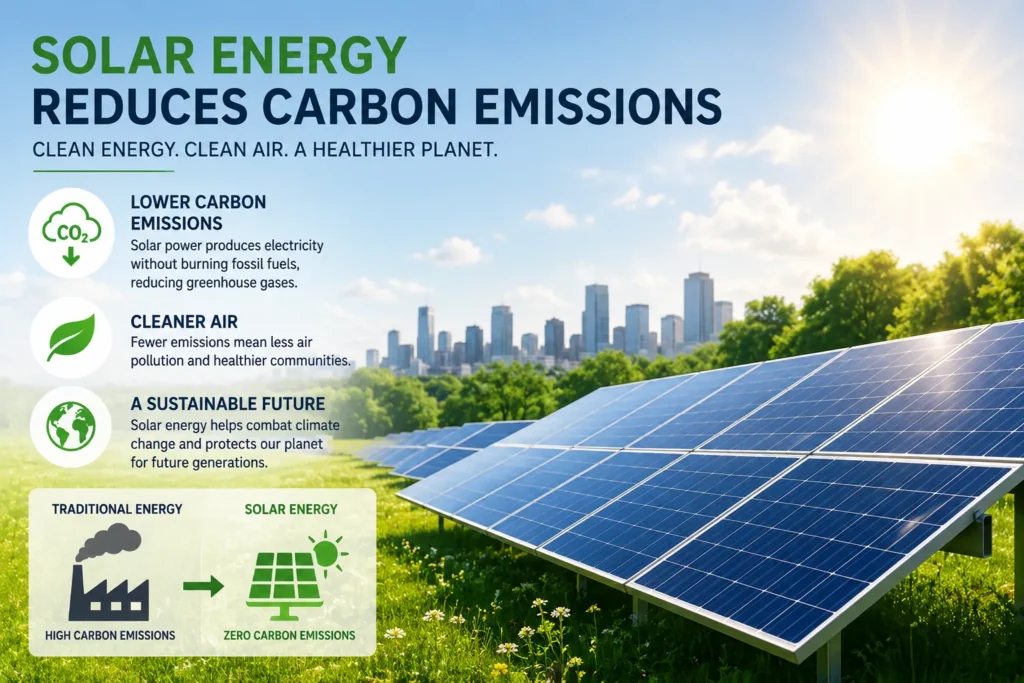
The biggest environmental advantage of solar is its role in cutting greenhouse gas emissions. Electricity from fossil fuels is a major source of carbon dioxide in the US. When a solar array offsets grid electricity, it can reduce the amount of power that needs to come from carbon-intensive sources.
The exact reduction depends on location. In areas where the grid relies heavily on coal or gas, every kilowatt-hour of solar can displace a more emissions-heavy power mix. In regions with cleaner grids, the carbon impact may be smaller per unit of electricity, but it is still meaningful over the life of a system.
This is one reason solar has become attractive across market segments. A homeowner may see it as a way to reduce household emissions. A business may use it to support ESG targets or customer expectations. Farms and public agencies may view it as a practical step toward long-term resilience and lower environmental impact.
It is fair to note that solar panels are not emissions-free from day one. Manufacturing, shipping, installation, and eventual disposal all create some carbon impact. But over their operating life, solar systems generally produce far more clean energy than the energy used to make them. That is why lifecycle emissions for solar remain far below those of fossil fuel generation.
Cleaner Air And Public Health Benefits
When power plants burn fossil fuels, they release more than carbon dioxide. They can also emit sulfur dioxide, nitrogen oxides, and particulate matter, all of which affect air quality. Those pollutants are linked to respiratory and cardiovascular problems, especially in communities located near major roads, industrial centers, or fossil fuel generation assets.
Solar helps by reducing dependence on those sources of power. Because panels generate electricity without combustion, they do not release air pollution while operating. At scale, that contributes to cleaner air and can support broader public health improvements.
This benefit is easy to overlook because it is less visible on a monthly electric bill. Still, for schools, government facilities, farms, and businesses with community-facing operations, cleaner air is a meaningful environmental outcome. It supports the case for solar as more than a private cost-saving tool.
Reduced Water Use In Power Generation
One of the less discussed environmental benefits of solar energy is water conservation. Traditional thermoelectric power plants, including coal, natural gas, and nuclear facilities, often use large volumes of water for cooling. In drought-prone regions or areas with stressed water supplies, that matters.
Solar photovoltaic systems use little to no water to generate electricity. Some systems may need occasional panel cleaning, especially in dusty climates or agricultural settings, but that is very different from the ongoing water demands of conventional generation.
For agricultural operators and facilities managers in the western US, this can be a strong part of the case for solar. Reducing the water intensity of your energy supply supports a broader resource management strategy, particularly where both power costs and water availability are under pressure.
Less Reliance On Finite Fuels
Coal, oil, and natural gas are limited resources that must be extracted, processed, and transported. Each step carries environmental costs, from land disruption and methane leakage to spills and infrastructure expansion. Solar does not eliminate those systems overnight, but it does reduce the need to keep feeding them at the same pace.
Sunlight is abundant and renewable. Once a solar system is in place, its fuel source arrives without drilling, mining, or delivery. That helps reduce the environmental strain associated with conventional energy supply chains.
This matters for organizations thinking beyond a single building. If your goal is to operate more sustainably over decades, shifting part of your energy use to a renewable source can lower exposure to the environmental risks tied to fuel volatility and extraction.
A Smaller Operational Footprint On Site
For many properties, solar also offers a cleaner operating profile than fuel-based alternatives such as diesel generators or continuous fossil-fuel-powered backup systems. Rooftop and carport solar can produce electricity with minimal day-to-day disruption, low noise, and no on-site emissions.
That can be especially useful for schools, municipal sites, offices, and agricultural properties where noise, air quality, and maintenance burdens all matter. Ground-mounted systems require more space, so the environmental trade-off can be more site-specific. If farmland, habitat, or sensitive land is involved, layout and placement should be reviewed carefully.
In other words, solar is not automatically low-impact in every configuration. Rooftop systems often make the strongest environmental case because they use already-developed space. Ground-mounted systems can still be a smart option, but project design matters.
The Manufacturing Question Is Real
A practical solar conversation should include the environmental costs upfront. Panels, inverters, racking, and batteries all require raw materials and industrial manufacturing. Mining and production can create waste, emissions, and other environmental impacts. Battery storage adds another layer of material demand, even though it can improve how solar energy is used.
That does not cancel out the value of solar. It means buyers should think in lifecycle terms rather than assume any clean-energy product is impact-free. Well-made systems that perform reliably for decades usually deliver much stronger environmental results than low-quality equipment that needs early replacement.
This is one reason contractor selection matters. A qualified installer can help you evaluate system design, expected production, equipment quality, and whether storage makes sense for your goals. Better planning usually leads to better long-term environmental and financial outcomes.
Solar Supports A Cleaner Grid Over Time
Individual solar projects add up. As more homes, businesses, farms, and public facilities install solar, the grid can rely less on high-emission generation during daylight hours. In some markets, that can help reduce peak demand pressure and support a broader transition to cleaner electricity.
The effect is not identical everywhere. Local utility rules, net metering policies, interconnection limits, and grid mix all influence how much environmental value a project delivers. But in general, distributed solar helps diversify the power system and move more generation closer to where electricity is used.
That local generation can also reduce some transmission losses. While that is not the headline benefit most buyers focus on, it is another reason solar can contribute to a more efficient energy system overall.
What This Means For Your Property
If you are evaluating solar, the environmental case is strongest when the system is sized appropriately, installed well, and matched to the site. A shaded roof with poor orientation may not produce enough to justify the investment. A well-positioned commercial roof, open farm site, or municipal facility with strong daytime demand may see much better results.
For many buyers, the best next step is not guessing. It is comparing options with professionals who understand your project type. Residential, commercial, agricultural, and public-sector solar all come with different design needs, incentives, and operational priorities.
If you want the environmental benefits of solar energy without wasting time on the search process, getting multiple quotes is usually the smartest move. Platforms like Solar Contractors make it easier to Find A Contractor, compare providers, and request a Free Consultation based on your property and goals.
Solar is not a perfect fix for every energy challenge. But for many US property owners, it is one of the clearest ways to cut emissions, support cleaner air, and reduce resource use while making a practical long-term investment. The right project can do good for your bottom line and leave your property operating lighter on the environment every year after that.
FAQ About Environmental Benefits of Solar Energy
Does solar energy reduce carbon emissions?
Is solar energy environmentally friendly?
Does solar energy use water?
What are the biggest environmental benefits of solar energy?

8 Solar Contractor Market Trends to Watch
See the top solar contractor market trends shaping residential, commercial, farm, and public projects, from pricing shifts to storage demand.
Environmental Benefits of Solar Energy
Learn the environmental benefits of solar energy, from lower emissions and cleaner air to reduced water use and less strain on ecosystems.